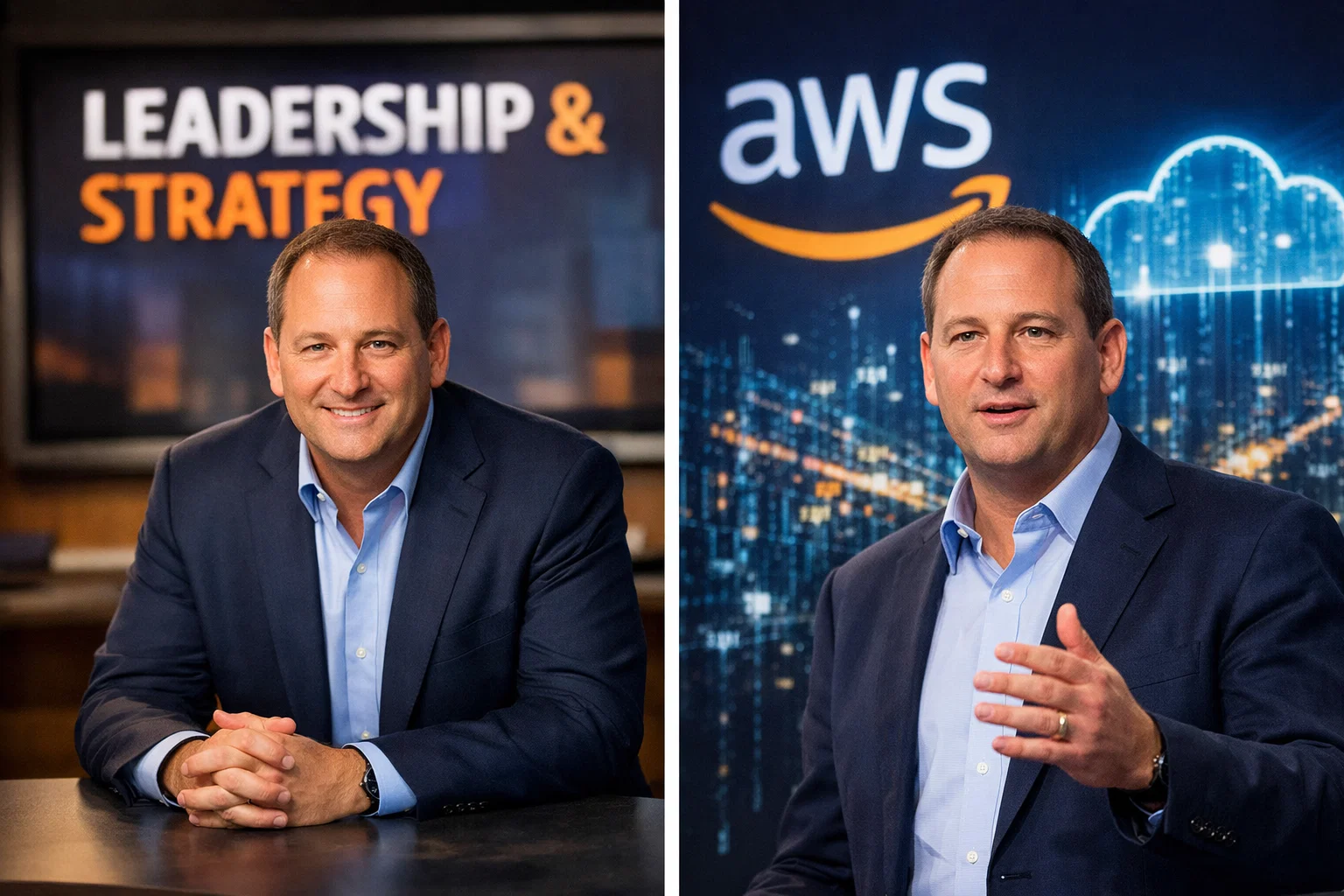
Few technology executives have navigated the shifting terrain of cloud computing as decisively as Adam Selipsky. Over the past two decades, he has shaped enterprise technology conversations at the highest level, influencing how global organizations think about infrastructure, analytics, scalability, and innovation.
From his early leadership days at Amazon Web Services to his tenure at Tableau and his return to AWS, Adam Selipsky’s career reflects the evolution of modern cloud computing itself. This comprehensive guide explores his background, leadership philosophy, strategic decisions, industry influence, and the long-term implications of his work for enterprises worldwide.
Early Life, Education, and Foundations of Leadership
Adam Selipsky’s leadership story begins with an academic foundation rooted in analytical rigor and business strategy. A graduate of Harvard Business School, he developed an early appreciation for operational discipline, strategic clarity, and customer-centric thinking—principles that would later define his executive career.
His formative years in consulting and corporate roles built a mindset centered on structured problem-solving and measurable outcomes. Those experiences instilled a habit of balancing innovation with accountability, a combination that would become essential in high-growth cloud environments where both experimentation and operational precision are critical.
Entry into Amazon and the Birth of Cloud Momentum
When Adam Selipsky joined Amazon in the mid-2000s, cloud computing was still emerging from its experimental phase. Businesses were cautious, skeptical about moving workloads away from traditional data centers, and uncertain about the long-term viability of utility-style computing models.
Within AWS, he helped shape enterprise go-to-market strategy at a time when the company was transforming from a developer-focused infrastructure provider into a global enterprise platform. This period laid the groundwork for AWS’s dominance and positioned Adam Selipsky as one of the architects of enterprise cloud adoption.
Scaling Amazon Web Services into an Enterprise Powerhouse
As AWS expanded, Adam Selipsky played a central role in translating technical capabilities into business value narratives for Fortune 500 companies. He emphasized that cloud computing was not merely about cost savings but about enabling agility, innovation, and digital transformation at scale.
Under his leadership, AWS strengthened its enterprise sales organization, deepened partnerships, and refined its customer engagement model. These strategic shifts helped accelerate mainstream cloud adoption and redefined how large organizations approached IT modernization.
Leadership Philosophy: Customer Obsession and Clarity
One defining trait of Adam Selipsky is his commitment to customer-first thinking. In high-growth cloud markets, it is easy to become product-centric, but he consistently advocated for aligning innovation with real-world enterprise challenges.
He has often reinforced the idea that complexity must be abstracted away from customers. As he once noted in a leadership discussion, “Our job is to remove undifferentiated heavy lifting so our customers can focus on what truly sets them apart.” That perspective shaped product strategy and operational priorities across his organizations.
Transition to Tableau and Data-Centric Strategy
In 2016, Adam Selipsky left AWS to become CEO of Tableau, a company at the forefront of data visualization and business intelligence. This move reflected a broader industry shift from infrastructure enablement to data-driven decision-making.
At Tableau, he oversaw significant expansion in enterprise adoption and global footprint. His focus was on empowering business users—not just technical teams—to leverage analytics, reinforcing the idea that digital transformation requires democratized access to insights.
Navigating the Salesforce Acquisition Era
During his time at Tableau, the company was acquired by Salesforce, marking one of the largest data analytics acquisitions in the technology sector. Adam Selipsky played a crucial role in ensuring strategic alignment while maintaining Tableau’s innovation culture.
He balanced integration with autonomy, preserving product identity while leveraging Salesforce’s distribution scale. This approach minimized disruption and positioned Tableau as a core pillar of enterprise customer relationship intelligence.
Return to AWS and Executive Succession
In 2021, Adam Selipsky returned to AWS as CEO, succeeding Andy Jassy when Jassy became CEO of Amazon. The transition signaled continuity, stability, and renewed strategic focus.
His return came at a pivotal time: cloud markets were maturing, competition was intensifying, and enterprises were demanding more advanced solutions in AI, machine learning, and hybrid architecture. His leadership ensured AWS remained both innovative and operationally disciplined.
Competitive Positioning Against Microsoft and Others
Cloud competition intensified as AWS faced formidable rivals like Microsoft and Google. Adam Selipsky emphasized differentiation through breadth of services, ecosystem depth, and enterprise trust.
Rather than focusing on feature-by-feature battles, he reinforced AWS’s narrative around reliability, global infrastructure scale, and long-term partnership models. This strategic positioning helped AWS maintain leadership even as the market diversified.
Strategic Emphasis on Artificial Intelligence and Machine Learning
Under Adam Selipsky’s guidance, AWS accelerated its investments in AI and machine learning services. Recognizing that infrastructure alone was no longer sufficient, he positioned AWS as a platform for intelligent applications and predictive systems.
This strategy reflected a broader industry truth: cloud infrastructure is the foundation, but AI capabilities drive next-generation differentiation. His approach ensured AWS integrated advanced capabilities without compromising usability for mainstream enterprises.
Hybrid Cloud and Enterprise Realism
Not every organization moves fully into public cloud environments overnight. Adam Selipsky acknowledged this reality and championed hybrid and multi-cloud strategies that respected existing enterprise architectures.
By supporting flexible deployment models, AWS strengthened trust among cautious enterprises. This pragmatic stance reinforced the idea that digital transformation must align with operational realities rather than ideological purity.
Financial Discipline and Operational Efficiency
As macroeconomic conditions tightened in the early 2020s, enterprises scrutinized technology spending more carefully. Adam Selipsky responded by emphasizing cost optimization, efficiency tools, and measurable ROI.
He balanced innovation investments with financial accountability, reinforcing AWS’s credibility among CFOs and boards. This alignment between technology ambition and fiscal discipline strengthened enterprise confidence.
Organizational Culture and Talent Development
Leadership at scale requires more than strategy; it demands culture stewardship. Adam Selipsky prioritized leadership development, operational excellence, and diversity initiatives within AWS.
By cultivating high-performing teams and clear accountability structures, he maintained momentum in a fast-moving industry. His management style combined data-driven decision-making with transparent communication.
Industry Influence and Thought Leadership
Beyond corporate strategy, Adam Selipsky has influenced broader industry conversations around digital transformation. His keynote presentations often frame cloud computing as a long-term platform shift rather than a short-term trend.
Through industry forums and enterprise dialogues, he has reinforced the importance of agility, resilience, and innovation. This thought leadership amplifies AWS’s brand while shaping market expectations.
Crisis Leadership and Market Volatility
Technology markets are cyclical, and leadership is tested during volatility. Adam Selipsky navigated supply chain disruptions, economic slowdowns, and shifting enterprise priorities with measured communication.
His emphasis on stability and long-term planning reassured customers and investors alike. By focusing on durable fundamentals rather than reactive shifts, he maintained strategic continuity.
Global Expansion and Infrastructure Investment
AWS’s global footprint expanded significantly under Adam Selipsky’s leadership. New regions, availability zones, and data centers strengthened geographic redundancy and compliance capabilities.
This global expansion enabled multinational enterprises to deploy applications closer to users while meeting regulatory requirements. Infrastructure scale became both a technical and competitive advantage.
Innovation Through Ecosystem Partnerships
No cloud provider operates in isolation. Adam Selipsky strengthened AWS’s partner ecosystem, supporting ISVs, startups, and systems integrators.
These partnerships expanded solution breadth and accelerated innovation. By nurturing a vibrant ecosystem, AWS reinforced its position as a foundational platform rather than a closed system.
Sustainability and Responsible Growth
Environmental impact has become a central concern in technology infrastructure. Adam Selipsky integrated sustainability commitments into AWS’s long-term roadmap.
Investments in renewable energy, energy-efficient data centers, and carbon reduction strategies aligned cloud growth with environmental responsibility. This balance reflects evolving stakeholder expectations.
Key Strategic Milestones Overview
Below is a high-level comparison of major strategic phases associated with Adam Selipsky’s career trajectory:
| Phase | Organization | Strategic Focus | Market Impact |
| Early AWS Tenure | Amazon Web Services | Enterprise adoption, sales scaling | Accelerated mainstream cloud migration |
| Tableau CEO | Tableau | Data democratization, analytics growth | Expanded BI accessibility |
| Salesforce Acquisition Period | Salesforce | Integration with CRM ecosystem | Strengthened analytics within enterprise CRM |
| Return to AWS | Amazon Web Services | AI expansion, cost optimization, hybrid strategy | Reinforced cloud leadership amid competition |
This structured overview illustrates how Adam Selipsky consistently aligned organizational capabilities with broader industry shifts.
Leadership Style Compared to Industry Peers
When comparing Adam Selipsky to other technology executives, a defining trait emerges: strategic steadiness. While some leaders prioritize bold public narratives, his approach emphasizes disciplined execution.
This steadiness resonates strongly in enterprise markets, where reliability and predictability often outweigh flashier messaging. His influence reflects substance over spectacle.
Impact on Enterprise Digital Transformation
Digital transformation is often described abstractly, but Adam Selipsky has framed it in practical terms: modernizing infrastructure, enabling data-driven decisions, and building resilient systems.
By focusing on tangible outcomes, he has helped enterprises translate buzzwords into operational initiatives. This clarity has strengthened AWS’s relevance across industries.
Long-Term Legacy in Cloud Computing
The long-term legacy of Adam Selipsky will likely center on scaling trust in cloud computing. During his tenure, cloud shifted from optional innovation to core enterprise infrastructure.
His leadership bridged early adoption phases and mature enterprise reliance. That transition marks a defining chapter in the broader history of cloud computing.
The Future Outlook for Adam Selipsky
Looking ahead, Adam Selipsky’s influence will likely continue shaping enterprise technology strategy. As AI, automation, and distributed computing evolve, his experience positions him at the intersection of innovation and governance.
Whether guiding AWS or influencing the broader technology ecosystem, his career reflects adaptability, discipline, and forward-looking strategy. These traits will remain critical as technology continues to transform global business.
Conclusion: A Defining Figure in Modern Cloud Leadership
Adam Selipsky represents a generation of technology leaders who translated technical innovation into enterprise-scale impact. His career spans foundational cloud growth, analytics transformation, competitive strategy, and AI expansion.
By combining customer obsession, operational rigor, and strategic clarity, he has shaped how organizations view cloud computing today. His leadership story offers practical lessons for executives navigating digital transformation in an increasingly complex technological landscape.
FAQ
Who is Adam Selipsky?
Adam Selipsky is a technology executive best known for his leadership roles at Amazon Web Services and Tableau, where he shaped enterprise cloud and analytics strategy.
What is Adam Selipsky known for at AWS?
Adam Selipsky is known for scaling AWS’s enterprise adoption, strengthening competitive positioning, and expanding AI and hybrid cloud strategies.
Did Adam Selipsky lead Tableau?
Yes, Adam Selipsky served as CEO of Tableau and guided the company through significant growth and its acquisition by Salesforce.
How did Adam Selipsky influence cloud computing?
Adam Selipsky influenced cloud computing by focusing on enterprise trust, operational discipline, and customer-centric innovation at scale.
What leadership qualities define Adam Selipsky?
Adam Selipsky is recognized for strategic clarity, customer-first thinking, financial discipline, and steady execution in competitive markets.