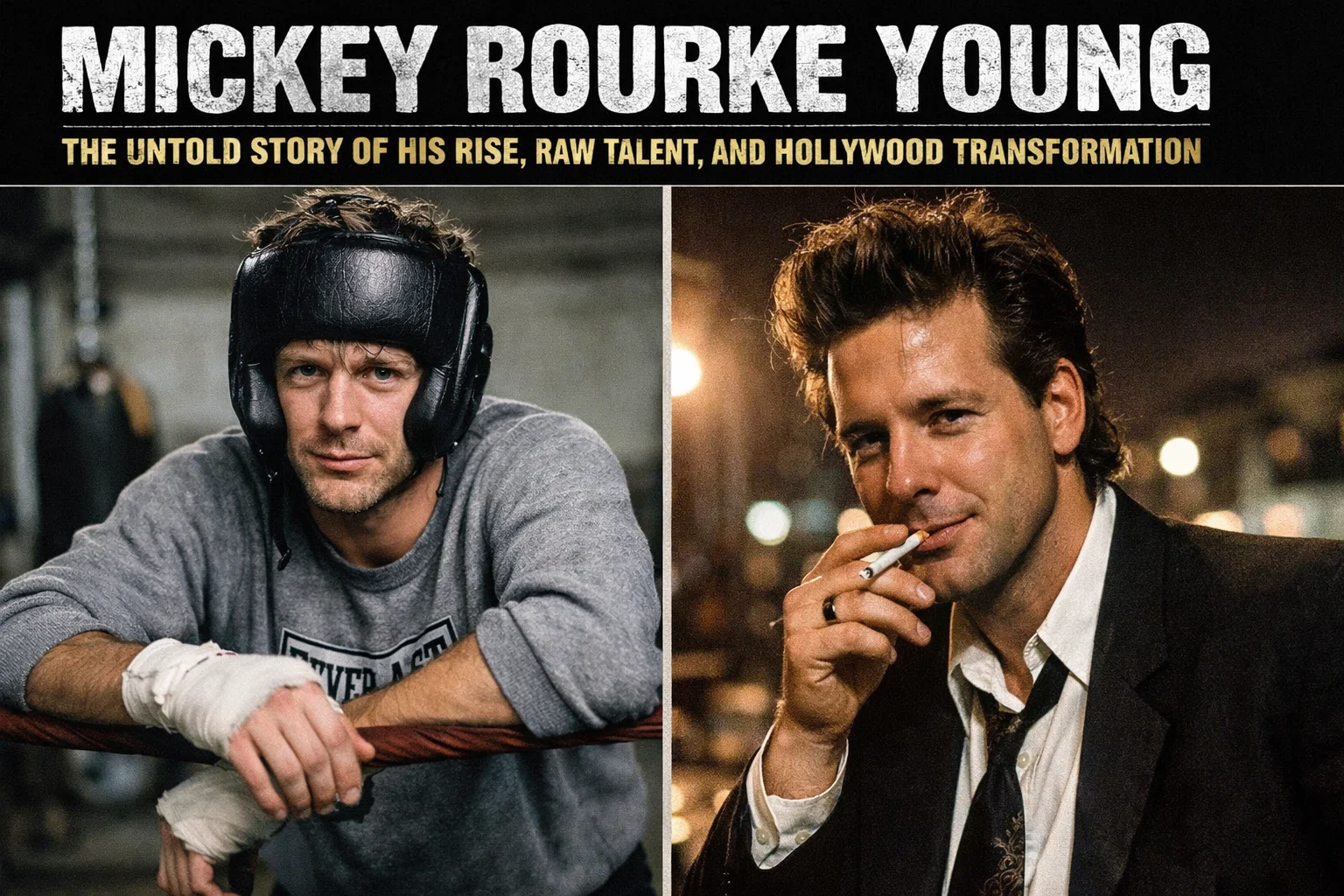
Few actors have experienced a trajectory as dramatic, controversial, and fascinating as Mickey Rourke. When audiences search for “mickey rourke young,” they’re not just looking for old photos — they’re searching for a moment in Hollywood history when raw charisma, rebellious energy, and unconventional beauty collided on screen.
Before the headlines, before the physical transformations, and long before his comeback in The Wrestler, there was a young actor with undeniable presence. This article explores Mickey Rourke’s early life, breakout performances, physical appeal, acting technique, boxing detour, industry conflicts, and the legacy of his youth — delivering a complete authority-level deep dive into one of Hollywood’s most compelling figures.
SEO Title: Mickey Rourke Young: Early Career, Rise to Fame, Iconic Roles & Hollywood Transformation
Meta Description: Discover Mickey Rourke young — his early career, breakthrough films, boxing years, and how his youth shaped a Hollywood legend.
Early Life and Formative Years
Mickey Rourke was born Philip Andre Rourke Jr. on September 16, 1952, in Schenectady, New York, and raised primarily in Miami, Florida. His early life was marked by instability, family tension, and a strong desire to escape difficult circumstances — themes that would later surface in his performances.
Growing up in a turbulent household shaped the emotional intensity associated with Mickey Rourke young. He gravitated toward athletics, especially boxing, channeling aggression into discipline. That foundation — physical, emotional, and psychological — would define both his early screen presence and later life decisions.
The Boxing Background That Shaped His Acting
Long before Hollywood noticed him, Rourke trained seriously as an amateur boxer. He competed in numerous matches, developing resilience, endurance, and a high tolerance for physical pain — traits that would later influence the rugged aura people associate with Mickey Rourke young.
Boxing instilled an understanding of vulnerability beneath toughness. This layered duality became visible in his film roles. He didn’t portray macho characters as invincible; he portrayed them as damaged, conflicted, and human — a distinction that set him apart from many 1980s leading men.
Arrival in Hollywood and Early Struggles
Rourke moved to New York to study at the prestigious Actors Studio, where he trained under Lee Strasberg’s Method techniques. Immersed in character psychology and emotional recall, he developed a performance style that felt dangerously authentic.
The early years were not glamorous. Small roles, auditions, and rejections defined this period. But even in minor appearances, casting directors noticed something electric about Mickey Rourke young — a presence that felt unpredictable yet magnetic.
Breakthrough in Diner and Rising Stardom
His breakout role came in Diner, directed by Barry Levinson. As “Boogie,” Rourke delivered a performance that balanced humor, vulnerability, and swagger, instantly marking him as a rising star.
The success of Diner opened doors, and Hollywood began positioning Mickey Rourke young as a new kind of leading man. He wasn’t polished like traditional stars; he was raw, slightly dangerous, and intensely real.
The 1980s Icon: Sex Symbol and Serious Actor
By the mid-1980s, Rourke became a cultural phenomenon. Films like 9½ Weeks transformed him into an international sex symbol, thanks to his smoldering screen presence and brooding intensity.
Yet beneath the surface appeal, critics recognized serious talent. His performances in Angel Heart and Rumble Fish showcased emotional complexity and psychological depth rarely seen in conventional romantic leads.
The Distinctive Look of Mickey Rourke Young
Physically, Mickey Rourke young had striking features: sharp cheekbones, piercing eyes, and a slightly crooked smile that suggested both charm and unpredictability. He didn’t look manufactured; he looked lived-in.
His aesthetic combined rugged masculinity with vulnerability. Unlike the clean-cut stars of the era, Rourke projected edge. That edge became part of his brand and fueled his growing fan base.
Acting Style: Method Intensity and Emotional Risk
Rourke’s commitment to method acting blurred the lines between performance and reality. He immersed himself in characters fully, sometimes clashing with directors over authenticity.
This uncompromising dedication made Mickey Rourke young captivating to watch. Audiences felt they were witnessing something spontaneous rather than rehearsed. That unpredictability became a defining strength — and occasionally, a professional liability.
The Outsider Persona and Industry Conflict
Despite commercial success, Rourke developed a reputation for being difficult. He resisted Hollywood expectations, refused formulaic roles, and openly criticized studio politics.
The industry often struggles with artists who don’t conform. As Mickey Rourke young gained fame, he also accumulated tension with producers and directors, slowly complicating his career trajectory.
From Stardom to Boxing Comeback
In the early 1990s, Rourke made the surprising decision to return to professional boxing. This shift shocked Hollywood and altered his physical appearance significantly.
While some view this period as a derailment, others see it as consistent with the rebellious identity of Mickey Rourke young. He chose authenticity over comfort — even at great personal cost.
The Physical Transformation and Public Perception
Boxing injuries, facial reconstructive surgeries, and time away from mainstream cinema drastically changed Rourke’s appearance. Comparisons between his early photos and later years fueled intense media scrutiny.
The fascination with “before and after” imagery often overshadows deeper discussions about talent. Yet the appeal of Mickey Rourke young remains rooted in more than aesthetics — it lies in emotional presence and cinematic intensity.
Filmography Comparison: Early Career vs Later Comeback
Below is a structured comparison highlighting the differences between Mickey Rourke young and his later career phase.
| Category | Early Career (1980s) | Later Career (2000s Onward) |
| Physical Appearance | Lean, sharp features, romantic lead | Weathered, rugged, distinctive |
| Screen Persona | Brooding heartthrob | Battle-scarred antihero |
| Acting Style | Intense, method-driven, unpredictable | Reflective, emotionally grounded |
| Industry Position | Rising A-list star | Comeback character actor |
| Cultural Perception | Sex symbol and rebel | Resilient survivor |
This contrast shows evolution rather than decline. The myth of Mickey Rourke young continues to influence how audiences interpret his later performances.
The Wrestler and Career Resurrection
Rourke’s performance in The Wrestler marked one of the most powerful comebacks in modern cinema. As Randy “The Ram” Robinson, he embodied physical damage and emotional regret with haunting realism.
Critics widely interpreted the role as autobiographical. The emotional depth he brought to the character echoed the spirit of Mickey Rourke young — but matured through lived experience.
Influence on Modern Antiheroes
Contemporary actors who portray emotionally fractured men owe something to Rourke’s early work. His performances in films like Barfly redefined masculinity on screen.
Instead of polished heroes, he portrayed flawed men searching for meaning. That archetype has become central in modern cinema and streaming-era storytelling.
Cultural Legacy of Mickey Rourke Young
The fascination with Mickey Rourke young reflects broader cultural nostalgia for 1980s Hollywood — a period of experimental storytelling and distinctive personalities.
He represents a time before social media branding, when stars were mysterious and unpredictable. That mystique adds to his enduring relevance.
The Emotional Core Beneath the Image
One of Rourke’s most quoted reflections captures his philosophy: “Sometimes the only thing that keeps you going is your heart.” That statement mirrors the emotional rawness that defined his youth.
When audiences revisit Mickey Rourke young performances, they often describe feeling something immediate and unscripted — an emotional honesty that transcends decades.
Misconceptions About His Career
A common misconception is that Rourke’s career collapsed solely due to personal choices. In reality, Hollywood’s shifting landscape, evolving studio systems, and changing audience tastes all played roles.
Understanding Mickey Rourke young requires contextualizing the era. The 1980s favored bold personalities; the 1990s leaned toward different archetypes, altering opportunity pipelines.
Why Interest in Mickey Rourke Young Endures
Search trends consistently show fascination with early photos, film clips, and interviews. People aren’t merely curious about appearance — they’re intrigued by transformation.
The story of Mickey Rourke young embodies themes of ambition, rebellion, consequence, and redemption. That narrative arc feels timeless.
Conclusion: The Myth, the Man, the Legacy
Mickey Rourke’s early years capture a rare moment in Hollywood when danger and vulnerability shared the same frame. The keyword “mickey rourke young” represents more than a phase — it symbolizes raw potential, artistic risk, and cultural impact.
His journey from rising heartthrob to wounded antihero and eventual comeback figure reflects the complexity of artistic life. While his appearance changed and his career fluctuated, the intensity that defined Mickey Rourke young remains embedded in cinematic history.
FAQ
Who was Mickey Rourke young in Hollywood?
Mickey Rourke young was a rising 1980s star known for intense method acting, rebellious charisma, and roles in films like Diner and 9½ Weeks.
Why is Mickey Rourke young so popular online?
Interest in Mickey Rourke young centers on his striking early appearance, breakout performances, and the dramatic transformation that followed.
What movies defined Mickey Rourke young?
Key films include Diner, Rumble Fish, Angel Heart, and 9½ Weeks, which showcased his emotional depth and screen presence.
Did boxing change Mickey Rourke young physically?
Yes, injuries sustained during his boxing comeback significantly altered the appearance of Mickey Rourke young, leading to reconstructive surgeries.
How did Mickey Rourke young influence modern actors?
Mickey Rourke young influenced the portrayal of emotionally complex antiheroes, blending vulnerability with toughness in ways that shaped future performances.