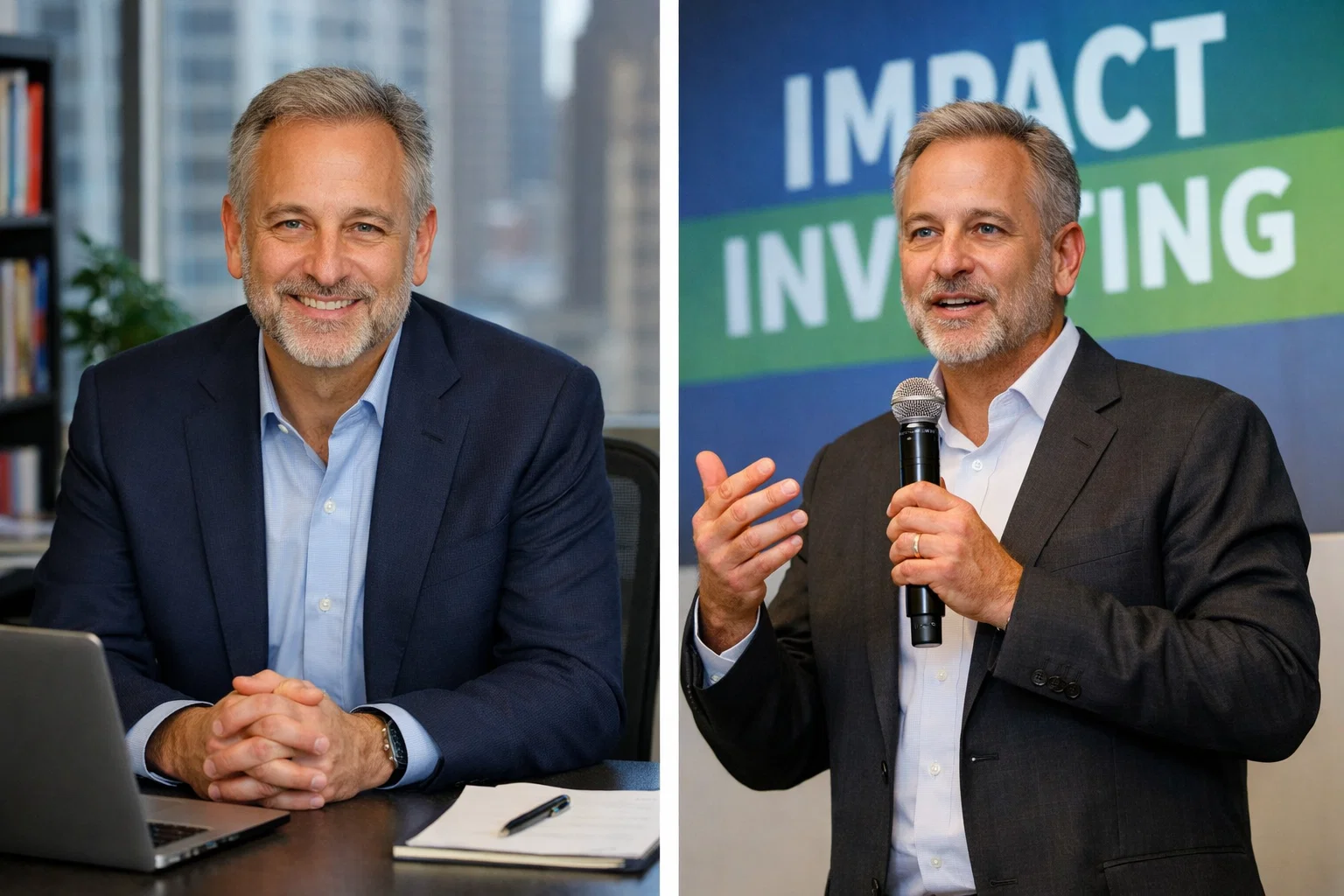
Few leaders in global finance have blended commercial rigor with mission-driven impact as effectively as Harlan Mandel. Across decades of executive leadership, board service, and international investment strategy, he has helped shape how capital flows into emerging markets and underserved communities.
This comprehensive guide explores the professional journey, strategic philosophy, and global influence of Harlan Mandel—examining how his work intersects with impact investing, development finance, corporate governance, and cross-border capital deployment. Whether you are an investor, policy analyst, or development professional, this article delivers deep, practical insight into his role in shaping modern financial impact infrastructure.
Early Career Foundations and Academic Background
Harlan Mandel’s professional arc reflects the kind of cross-disciplinary depth that defines modern development finance leadership. With academic grounding in law and international affairs, his training equipped him to navigate complex regulatory systems, sovereign risk frameworks, and cross-border transactions with confidence.
Early in his career, Harlan Mandel developed expertise in international law, structured finance, and capital markets. This foundation later proved critical as he transitioned into leadership roles that required managing institutional capital in high-growth, frontier economies while balancing risk mitigation and development objectives.
Executive Leadership at the Media Development Investment Fund
One of the most defining chapters of Harlan Mandel’s career has been his leadership at the Media Development Investment Fund. As CEO, he has overseen strategic investments supporting independent media organizations worldwide.
Under his direction, the organization refined a hybrid capital model combining debt, equity, and technical assistance. Harlan Mandel helped position the fund as a global leader in media-focused impact investing, deploying capital in markets where press freedom and financial sustainability intersect.
Strategic Vision: Blending Profit and Purpose
The strategic philosophy associated with Harlan Mandel emphasizes disciplined capital allocation aligned with measurable social outcomes. His approach rejects the false binary between profitability and impact.
Instead, Harlan Mandel champions a thesis-driven investment methodology. Capital is deployed into ventures that demonstrate long-term viability while strengthening democratic institutions, transparency, and economic inclusion.
Understanding Development Finance in Emerging Markets
Emerging markets require patient capital structures, local knowledge, and resilient risk frameworks. Harlan Mandel’s leadership reflects a nuanced understanding of currency volatility, political risk, and governance standards in developing economies.
Rather than applying traditional private equity metrics alone, Harlan Mandel integrates environmental, social, and governance (ESG) factors with liquidity modeling and downside protection strategies. This creates a blended investment framework designed for durability.
Board Service and Governance Influence
Beyond executive leadership, Harlan Mandel has contributed significantly through board memberships and advisory roles. His governance philosophy emphasizes transparency, accountability, and sustainable scaling.
Effective governance in impact organizations requires balancing mission integrity with financial oversight. Harlan Mandel has advocated for structured reporting systems, rigorous due diligence processes, and clearly defined performance metrics across portfolio companies.
Impact Investing: Philosophy and Practical Execution
Impact investing has evolved from niche strategy to mainstream asset class. Harlan Mandel has been part of that evolution, advocating for disciplined underwriting rather than purely narrative-driven funding.
He emphasizes measurable outputs—audience growth, revenue diversification, institutional resilience—rather than aspirational branding. This practical orientation has positioned Harlan Mandel as a credible voice among institutional investors exploring mission-aligned capital deployment.
Capital Structures Used in Media and Development Finance
To understand Harlan Mandel’s influence, it helps to examine the capital tools deployed within development-focused portfolios. The following table outlines common instruments and how they align with strategic objectives.
| Capital Instrument | Primary Use Case | Risk Profile | Impact Alignment | Liquidity Horizon |
| Senior Debt | Stabilizing cash-flow businesses | Moderate | Supports operational sustainability | Medium-term |
| Subordinated Debt | Growth-stage expansion | Higher | Enables innovation and scaling | Medium to long-term |
| Equity Investments | Long-term value creation | High | Aligns incentives with mission | Long-term |
| Convertible Notes | Transitional financing | Moderate to high | Flexible support for scaling | Variable |
| Technical Assistance Grants | Capacity building | Low financial risk | Direct institutional strengthening | Short to medium |
Harlan Mandel’s capital allocation strategy often blends these instruments to mitigate downside exposure while maintaining mission alignment.
Risk Management in Frontier Economies
Investing in politically sensitive or economically volatile environments demands structured risk controls. Harlan Mandel’s leadership has consistently emphasized diversified portfolios across geographies and currencies.
Currency hedging, staged disbursement schedules, and milestone-based funding are common risk mitigation tools. disciplined oversight ensures that portfolio exposure remains balanced even in unpredictable macroeconomic cycles.
Leadership Style and Organizational Culture
Colleagues frequently describe Harlan Mandel as analytical yet mission-driven. His leadership style blends data-informed decision-making with long-term strategic patience.
He fosters collaborative internal culture while maintaining clear performance expectations. In mission-based investing, clarity and discipline are essential—and s executive approach reflects both.
The Role of Independent Media in Democratic Systems
A core focus of Harlan Mandel’s work has been strengthening independent media ecosystems. Financial sustainability in journalism remains a global challenge, particularly in regions with weak advertising markets.
By structuring tailored financing for media outlets, has helped support press freedom infrastructure. Sustainable revenue models—subscriptions, diversified income streams, digital transformation—are central to this strategy.
Global Footprint and Geographic Reach
The work associated with Harlan Mandel spans multiple continents, including Eastern Europe, Latin America, Africa, and Asia. Each region presents unique regulatory, economic, and political conditions.
Strategic adaptability defines this global footprint.supports localized solutions rather than imposing centralized models, acknowledging that sustainable impact requires contextual sensitivity.
Financial Performance Versus Social Return
A frequent misconception in impact investing is that social returns inherently reduce financial performance. challenges that narrative through structured portfolio management.
Careful underwriting, governance oversight, and revenue modeling allow investments to achieve blended value creation. In many cases, strong social institutions enhance long-term financial resilience.
Institutional Partnerships and Capital Mobilization
Institutional capital often hesitates to enter emerging markets due to perceived instability. Harlan Mandel has worked to bridge that gap by demonstrating credible performance metrics and transparent reporting.
Partnerships with philanthropic institutions, development agencies, and private investors enable layered capital stacks. This blended finance architecture broadens access to capital while distributing risk.
Measuring Impact: Metrics That Matter
Quantifying impact requires more than anecdotal evidence. Harlan Mandel supports standardized measurement frameworks tied to measurable indicators such as audience reach, investigative output, and financial sustainability ratios.
Impact measurement systems under his leadership prioritize transparency. Investors receive clear dashboards combining operational performance with mission-driven metrics.
Adapting to Digital Transformation in Media
Digital disruption has redefined revenue models for media organizations worldwide.has guided portfolio companies toward subscription strategies, diversified digital monetization, and data-informed audience growth.
Technology integration is not treated as an afterthought. Instead, it is positioned as core infrastructure necessary for long-term sustainability and competitive positioning.
Cross-Border Regulatory Navigation
Operating across jurisdictions introduces complex compliance requirements. legal and financial background equips him to navigate cross-border capital restrictions and regulatory approvals.
Structured compliance frameworks protect both investors and local enterprises. This attention to regulatory detail strengthens institutional credibility.
Thought Leadership and Industry Influence
Harlan Mandel frequently contributes to broader conversations about sustainable finance and democratic infrastructure. His perspective integrates practical capital deployment with policy insight.
As one industry observer noted, “Sustainable impact investing requires both discipline and conviction—without either, capital drifts.” That sentiment closely reflects the operational philosophy associated with Harlan Mandel.
Addressing Common Misconceptions About Impact Finance
One misconception suggests that development finance is primarily grant-driven. work demonstrates that structured investments can achieve both mission alignment and financial accountability.
Another misunderstanding assumes impact investors avoid rigorous due diligence. In reality, Harlan Mandel emphasizes deeper scrutiny precisely because the operating environments can be complex.
Future Outlook for Impact Investment Strategy
The future of impact investing will likely see increased institutional participation, standardized reporting metrics, and deeper ESG integration. approach aligns with these emerging trends.
Scalability remains central. Sustainable models must attract broader pools of capital while preserving mission clarity—a balance has consistently advocated.
Conclusion
The professional trajectory of Harlan Mandel illustrates how disciplined financial strategy can intersect with democratic resilience and global development. Through executive leadership, governance expertise, and structured capital deployment, he has influenced the architecture of modern impact investing.
For investors, policymakers, and mission-driven entrepreneurs, the work associated with offers a compelling blueprint: align incentives, measure outcomes, manage risk rigorously, and never separate financial sustainability from institutional integrity.
FAQ
Who is Harlan Mandel?
Harlan Mandel is a finance executive known for leadership in impact investing and development finance, particularly through his work supporting independent media globally.
What organization is Harlan Mandel associated with?
Harlan Mandel serves in a leadership role at the Media Development Investment Fund, focusing on sustainable financing for independent journalism.
What is Harlan Mandel’s investment philosophy?
Harlan Mandel emphasizes disciplined underwriting, measurable social impact, and blended finance structures that balance risk with mission alignment.
How does Harlan Mandel approach risk management?
Harlan Mandel integrates diversified geographic exposure, milestone-based financing, and governance oversight to manage risk in emerging markets.
Why is Harlan Mandel significant in impact investing?
Harlan Mandel is significant because he demonstrates that structured capital deployment can strengthen democratic institutions while achieving financial accountability.