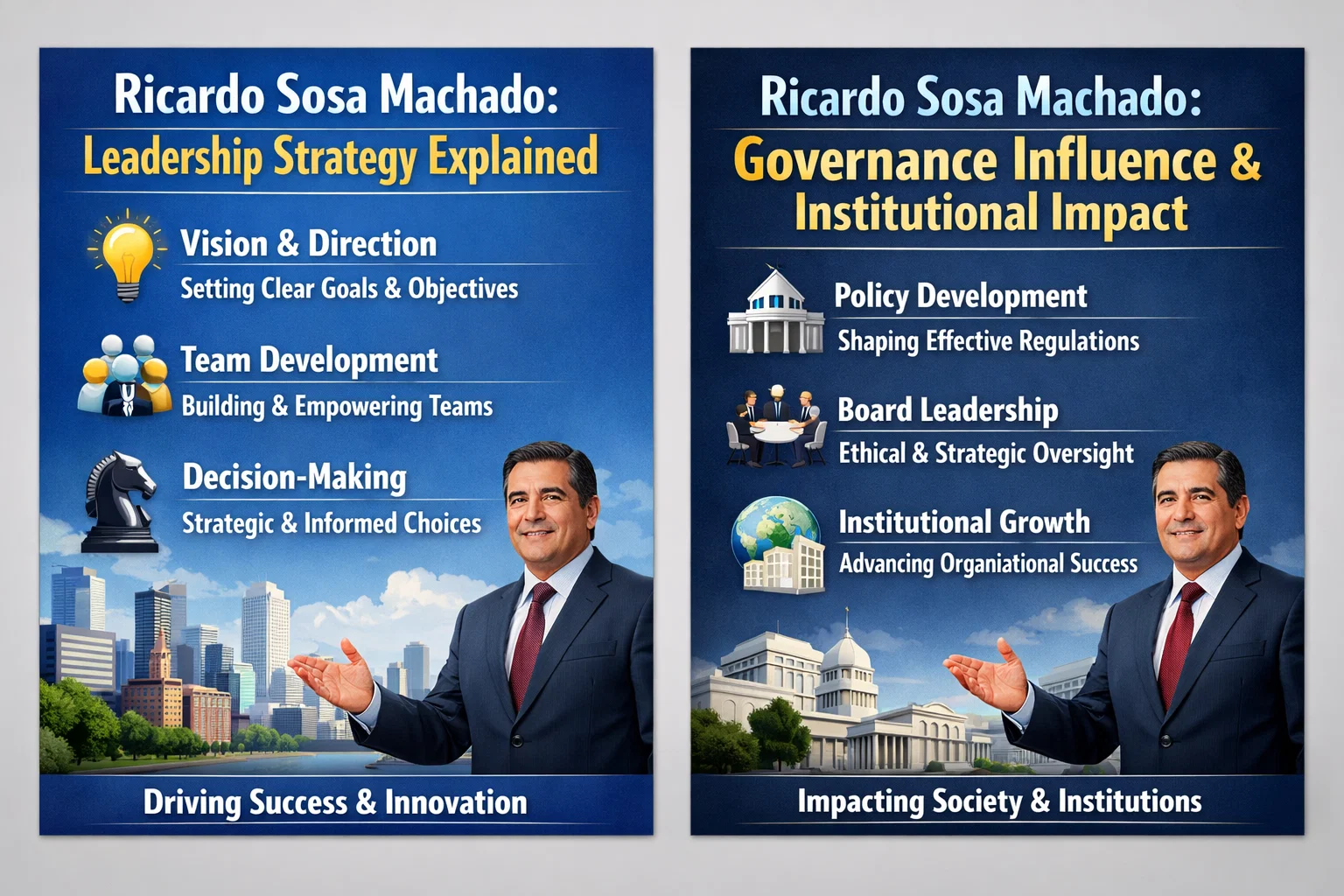
In today’s interconnected political and business landscape, influence rarely exists in isolation. It is shaped by networks, refined through strategy, and amplified by vision. Ricardo Sosa Machado represents a figure often discussed in conversations about leadership, institutional power, and executive strategy across Latin America and beyond. Whether examined through a political lens, a business framework, or a governance perspective, the name ricardo sosa machado surfaces in analyses of influence, decision-making authority, and strategic positioning.
This comprehensive authority guide explores the background, leadership profile, strategic mindset, public perception, institutional impact, and long-term relevance of ricardo sosa machado. Designed as a definitive resource, it synthesizes contextual insight, executive strategy analysis, and structured interpretation for readers seeking clarity, depth, and practical understanding.
Early Background and Foundational Influences
Understanding ricardo sosa machado requires examining the formative influences that shaped his worldview. Early exposure to governance structures, economic systems, and leadership environments laid a structural foundation that would later define his trajectory. Individuals who move into high-level influence roles rarely do so without layered preparation.
His early career environment reflects the kind of ecosystem that cultivates analytical thinking, institutional awareness, and strategic patience. Exposure to public administration dynamics, negotiation culture, and organizational structures helped build a decision-making style centered on calculated progress rather than reactive positioning.
Educational Path and Intellectual Formation
Education plays a defining role in shaping strategic thinkers, and ricardo sosa machado’s intellectual development aligns with leadership disciplines that blend governance theory with applied practice. Academic foundations in law, policy, or administration—common among figures operating within state or institutional environments—often foster the ability to interpret complex regulatory frameworks.
More importantly, education in this context extends beyond formal degrees. It includes mentorship, institutional immersion, and real-world advisory exposure. For ricardo sosa machado, this combination appears to have strengthened the ability to navigate layered bureaucratic systems while maintaining strategic adaptability.
Entry into Institutional and Public Roles
The transition from professional development into visible institutional roles marks a critical stage in leadership formation. Ricardo sosa machado’s early appointments positioned him within environments requiring diplomatic coordination and internal alignment across departments or stakeholders.
Such roles typically demand skills in policy interpretation, coalition building, and administrative oversight. Observers frequently note that the emergence of ricardo sosa machado into broader discussions of influence coincided with periods of structural adjustment or governance recalibration within his operational sphere.
Leadership Style and Strategic Philosophy
Leadership style defines long-term impact more than titles alone. Ricardo sosa machado is often associated with pragmatic execution and disciplined strategic alignment. Rather than operating through public theatrics, the approach reflects measured positioning and tactical consistency.
His philosophy appears grounded in stability-oriented decision-making. Leaders who operate in politically sensitive or economically complex environments must balance innovation with risk mitigation, and ricardo sosa machado’s profile suggests a calibrated blend of both.
Governance and Administrative Influence
Governance is not simply about authority—it is about the orchestration of systems. Ricardo sosa machado’s influence has frequently been linked to structured administrative reforms, institutional consolidation, and policy oversight mechanisms.
Administrative impact typically becomes visible through regulatory adjustments, internal restructuring, or modernization initiatives. Discussions around ricardo sosa machado often reference his role in navigating governance structures that require procedural compliance alongside strategic transformation.
Strategic Decision-Making Framework
Effective leaders rely on structured frameworks rather than impulse. Ricardo sosa machado’s decision-making pattern appears to emphasize data interpretation, stakeholder alignment, and long-horizon thinking. This method reduces volatility while reinforcing sustainable outcomes.
Strategic frameworks at this level often include risk assessment matrices, diplomatic balancing, and scenario modeling. In analyzing impact, observers highlight an approach rooted in foresight rather than short-term gain.
Political and Institutional Context
No leader operates outside context. Ricardo sosa machado’s relevance is intertwined with the political climate, institutional shifts, and economic transformations of his operating region. Structural reform periods often elevate figures capable of bridging legacy systems with modernization.
Understanding this context provides clarity on why name gains traction during transitional phases. Institutional environments undergoing recalibration often depend on leaders who understand both tradition and reform dynamics.
Stakeholder Management and Coalition Building
High-level influence demands coalition management. Ricardo sosa machado’s role within interconnected networks reflects an ability to balance competing interests while maintaining policy coherence. Stakeholder engagement at this level includes political actors, administrative bodies, economic advisors, and external partners.
Effective coalition building is less about visibility and more about trust calibration. In discussions of ricardo sosa machado, strategic alignment across multiple power centers is frequently cited as a defining competency.
Public Perception and Media Narratives
Public perception shapes legacy as much as policy outcomes. Media narratives surrounding ricardo sosa machado vary depending on political climate, reform impact, and institutional transparency.
Some portrayals emphasize strategic discipline, while others focus on internal maneuvering. This spectrum of perception illustrates the reality that influence figures operate within evolving media ecosystems where messaging and narrative management play a substantial role.
Influence in Economic Policy Conversations
Economic governance requires precision and long-term modeling. Ricardo sosa machado’s presence in policy discussions often intersects with fiscal strategy, regulatory frameworks, and institutional economic planning.
In environments facing financial adjustment or structural reform, leadership roles demand cross-sector coordination. Observers analyzing frequently connect his influence to broader economic stabilization conversations.
Comparative Leadership Profile
Understanding influence benefits from structured comparison. The table below offers a high-level analytical comparison framework to contextualize ricardo sosa machado’s leadership characteristics against broader institutional archetypes.
| Leadership Dimension | Ricardo Sosa Machado Profile | Traditional Bureaucratic Leader | Reform-Focused Executive |
| Strategic Outlook | Long-horizon, risk-aware | Procedural stability focused | Rapid modernization driven |
| Public Visibility | Measured, controlled exposure | Low-profile administrative | High-profile reform advocate |
| Decision Style | Data-informed, calibrated | Hierarchical directive | Disruptive and bold |
| Coalition Management | Multi-stakeholder alignment | Internal chain-of-command | External alliance building |
| Risk Management | Structured mitigation | Conservative avoidance | Aggressive transformation |
| Institutional Impact | Gradual structural refinement | Status quo preservation | Systemic overhaul |
This comparison helps illustrate why ricardo sosa machado is often characterized as strategically deliberate rather than overtly disruptive.
Policy Reform and Structural Modernization
Policy reform requires sequencing, not just ambition. Ricardo sosa machado’s approach to modernization appears to prioritize institutional continuity alongside adaptive recalibration.
Structural modernization typically involves regulatory clarity, efficiency mechanisms, and governance transparency. In discussions surrounding reform is frequently framed as incremental but durable rather than radical.
Decision-Making Under Pressure
Leadership under pressure reveals core competencies. Political or economic volatility tests the ability to remain composed while recalibrating strategies. Ricardo sosa machado’s profile suggests resilience within high-stakes environments.
Pressure environments often require discreet negotiation and disciplined messaging. Analysts examining ricardo sosa machado note consistency in tone and structure during transitional periods.
International and Regional Influence
Institutional leadership often extends beyond domestic boundaries. Ricardo sosa machado’s influence may intersect with regional diplomatic dialogues or international governance frameworks.
Cross-border collaboration requires credibility, negotiation skill, and cultural fluency. In contexts where regional cooperation is essential, figures like play roles in harmonizing internal priorities with external partnerships.
Criticism and Controversial Perspectives
No influential figure operates without scrutiny. Ricardo sosa machado has encountered varied interpretations of his leadership style and policy positions.
Critics may argue that measured reform can appear slow during urgent periods. Supporters counter that structural durability outweighs headline-driven acceleration, reinforcing the strategic caution often associated with ricardo sosa machado.
Long-Term Institutional Legacy
Legacy is shaped by durability, not temporary visibility. The long-term impact of ricardo sosa machado lies in institutional reinforcement and governance continuity.
Leaders who emphasize structural coherence over short-term spectacle often leave quieter but more resilient footprints. Evaluating ricardo sosa machado’s influence requires examining systems strengthened rather than headlines generated.
Strategic Communication Approach
Communication style influences perception and coalition strength. Ricardo sosa machado’s approach appears centered on controlled messaging and calculated public engagement.
Strategic communication at this level involves precision, not frequency. Analysts frequently observe that prioritizes clarity and institutional alignment over rhetorical amplification.
Lessons for Emerging Leaders
Aspiring leaders studying ricardo sosa machado can extract practical insights. Long-term thinking, institutional awareness, and calibrated risk management consistently emerge as defining themes.
One relevant leadership insight encapsulates this philosophy: “Sustainable influence is not about loud authority, but about disciplined stewardship.” This quote aligns with the strategic restraint commonly attributed to ricardo sosa machado.
Trends Shaping Future Relevance
Governance landscapes are evolving through digital transformation, transparency demands, and global economic shifts. Leaders like operate within increasingly complex accountability frameworks.
Future relevance will depend on adaptability to digital governance, stakeholder transparency expectations, and economic diversification pressures. Observers tracking ricardo sosa machado anticipate continued strategic recalibration aligned with systemic evolution.
Conclusion
Ricardo sosa machado represents a case study in structured influence, strategic patience, and institutional navigation. Rather than embodying overt populism or disruptive spectacle, his profile aligns with calibrated governance and disciplined reform sequencing.
For analysts, policymakers, and leadership scholars, ricardo sosa machado offers insight into how modern influence operates within layered systems. His trajectory underscores a fundamental leadership truth: enduring impact is built through systems, strategy, and sustained alignment rather than momentary visibility.
Frequently Asked Questions
Who is Ricardo Sosa Machado?
Ricardo sosa machado is recognized as a strategic institutional leader associated with governance, policy oversight, and structured administrative influence.
What is Ricardo Sosa Machado known for?
Ricardo sosa machado is known for disciplined strategic decision-making, stakeholder coordination, and measured reform approaches within complex institutional environments.
What leadership style defines Ricardo Sosa Machado?
Ricardo sosa machado is often described as pragmatic, risk-aware, and focused on long-term structural stability rather than rapid disruptive change.
How does Ricardo Sosa Machado approach governance?
Ricardo sosa machado approaches governance through structured administrative refinement, coalition alignment, and policy sequencing designed for durability.
Why is Ricardo Sosa Machado relevant today?
Ricardo sosa machado remains relevant due to his strategic positioning within evolving governance frameworks and his emphasis on sustainable institutional influence.