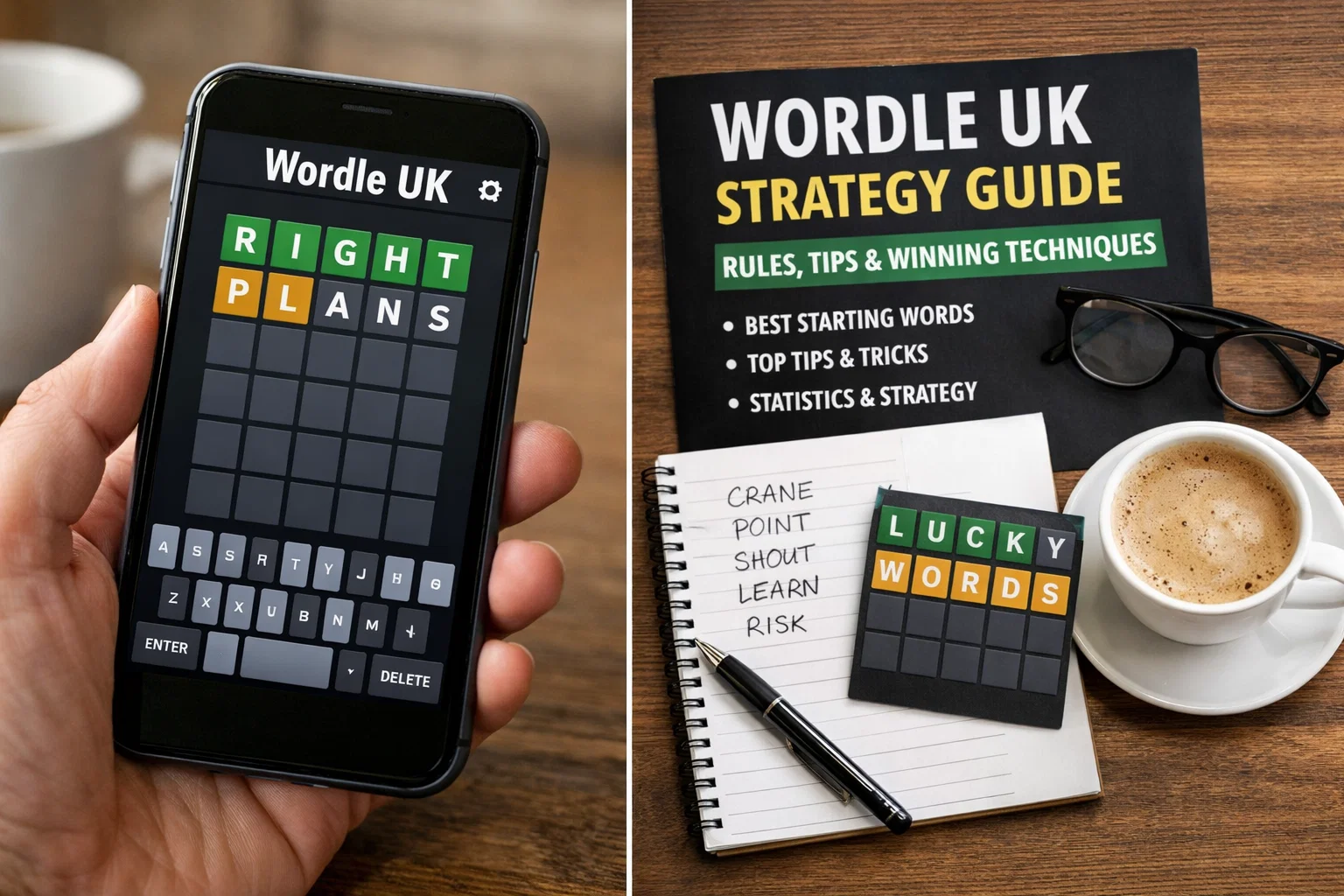
Few digital word games have reshaped modern puzzle culture the way Wordle has. In the UK especially, the daily five-letter challenge has become a ritual — a morning brain warm-up, a commuter distraction, and a social media staple all at once. Whether you’re a casual solver or a competitive streak-protector, understanding how Wordle works at a deeper level can dramatically improve your performance.
This comprehensive guide explores everything you need to know about wordle uk, from its origins and gameplay mechanics to advanced strategies, statistical insights, and cultural impact. You’ll learn how to think like a high-level solver, optimise your opening moves, and approach the puzzle with confidence every single day.
The Origins and Evolution of Wordle
Wordle was created by software engineer Josh Wardle as a personal project before becoming a global phenomenon. Its minimalist design, one-puzzle-per-day format, and shareable grid results quickly captured the imagination of players worldwide.
In 2022, the game was acquired by The New York Times, integrating it into a broader portfolio of digital puzzles. This transition subtly influenced word lists and puzzle management, which also impacted players searching for region-specific variations like wordle uk.
What Is Wordle UK and How Does It Differ?
At its core, wordle uk follows the same rules as the global version: guess a five-letter word in six attempts, using coloured tiles as feedback. Green indicates correct letter and position, yellow signals correct letter wrong position, and grey means the letter is not in the solution.
The subtle distinction lies in vocabulary. Wordle UK players often expect British English spellings and word usage. Words like “fibre” or “colour” reflect linguistic norms familiar to UK audiences, influencing strategy and expectations compared to US-centric word lists.
Core Rules and Game Mechanics
Each day presents one solution for all players globally, creating a shared puzzle experience. You begin with any valid five-letter word, and feedback refines your next guess through positional deduction and elimination.
The challenge balances logic and vocabulary. Unlike crossword clues, there are no hints beyond colour feedback, meaning players must rely on probability, pattern recognition, and strategic word selection.
Understanding Letter Frequency in British English
Strong Wordle players leverage letter frequency analysis. In British English corpora, letters such as E, A, R, T, and O appear most frequently, making them powerful starting candidates.
However, UK-specific word distributions slightly alter probability patterns. For example, words containing “U” after “O” or “L” may appear more often in British variants, making regional awareness useful in wordle uk gameplay.
The Psychology Behind Daily Puzzle Engagement
The appeal of Wordle is partly neurological. Solving a constrained puzzle triggers dopamine rewards tied to completion and pattern recognition.
Its once-a-day format reduces fatigue and preserves anticipation. Scarcity increases perceived value, making the daily ritual sustainable and habit-forming without overwhelming players.
Choosing the Perfect Starting Word
A high-performing starting word includes multiple vowels and common consonants. Words like “STARE,” “CRANE,” or “SLATE” are statistically strong because they test frequent letters early.
In wordle uk, considering British-favoured spellings can refine opening strategy. A word such as “ARISE” maintains vowel coverage while aligning with broad English vocabulary norms.
Advanced Opening Strategies
Elite solvers often employ a two-word opening system. The first guess maximises vowel coverage; the second eliminates high-frequency consonants not tested previously.
This structured approach reduces uncertainty quickly. Within two guesses, you can often isolate five to seven high-confidence letters, dramatically increasing win probability.
Letter Position Probability Insights
Certain letters frequently appear in specific positions. For instance, “E” commonly appears at the end of five-letter English words.
In wordle uk, patterns like “-ING” or “-ED” endings appear frequently in valid guesses, though not always as solutions. Recognising positional tendencies helps prioritise likely configurations.
Common Strategic Mistakes to Avoid
One common error is repeating eliminated letters. Even experienced players occasionally re-introduce grey letters out of habit.
Another mistake is ignoring positional data. If a letter is yellow, placing it in the same spot wastes a guess. Smart solvers treat each attempt as an information-maximising move.
Comparing Casual and Competitive Play Styles
Some players prioritise speed and streak preservation, while others aim for solving in three guesses or fewer. Competitive players analyse patterns statistically.
Casual players may rely on intuition. Both styles are valid, but strategic planning consistently produces better long-term outcomes in wordle uk.
Data-Driven Performance Metrics
Below is a structured comparison of performance tiers among players based on community data trends.
| Player Type | Average Guesses | Opening Strategy | Risk Level | Win Rate |
| Casual Solver | 4.5–5.2 | Random familiar word | Low | 90–94% |
| Strategic Regular | 3.8–4.3 | Frequency-based starter | Medium | 95–98% |
| Analytical Expert | 3.4–3.9 | Two-word elimination system | Balanced | 98–99% |
| Competitive Optimiser | 3.2–3.6 | Probabilistic modelling | Higher | 99%+ |
These ranges show how structured play reduces average guess count and increases consistency.
Hard Mode vs Standard Mode
Hard Mode requires you to use all revealed clues in subsequent guesses. If a letter turns green or yellow, it must remain in play.
This increases difficulty but rewards disciplined logic. Many wordle uk enthusiasts prefer Hard Mode for its puzzle-purity and challenge intensity.
The Cultural Impact in the UK
Wordle quickly embedded itself into British morning routines. Office conversations, family group chats, and social feeds became arenas for sharing coloured grids.
Its simplicity made it universally accessible. No flashy graphics or intrusive ads — just language, logic, and daily communal participation.
Social Sharing and Community Engagement
The grid-sharing format allows players to compare results without spoilers. This innovative design helped viral growth organically.
In the UK especially, puzzle culture already thrives through crosswords and newspaper brainteasers, making wordle uk a natural extension of existing habits.
Educational Benefits of Daily Word Play
Word games strengthen vocabulary, cognitive flexibility, and pattern recognition. Regular play supports language retention and mental agility.
Teachers have even incorporated Wordle-style puzzles into classrooms to improve spelling confidence and deductive reasoning.
Statistical Breakdown of Winning Patterns
Analysis of thousands of puzzle results reveals that most players solve the puzzle in four guesses. Three-guess solves represent high-efficiency play.
Two-guess wins are statistically rare but achievable when optimal opening words align with solution patterns.
Handling Repeated Letters
Repeated letters often trap players. If one “E” turns green, the solution may still contain another “E.”
Advanced players test for duplication deliberately. Avoid assuming a grey letter eliminates multiple occurrences without evidence.
British vs American Spelling Nuances
Regional spelling differences can subtly influence expectations. Words like “favour” versus “favor” illustrate how vocabulary norms shift.
Wordle UK solvers sometimes anticipate British forms, even though official word lists may vary. Understanding this nuance prevents confusion.
Strategy for Late-Game Guesses
When only two letters remain uncertain, avoid guessing random possibilities blindly. Instead, identify all valid words that fit the pattern.
Strategic narrowing increases probability dramatically. Treat the final guess as a calculated move, not a gamble.
The Role of Intuition vs Logic
Many players claim they “feel” the right word emerging. Intuition often reflects subconscious probability recognition.
However, disciplined elimination consistently outperforms gut instinct alone in wordle uk performance tracking.
Time Management and Daily Rituals
Some players solve instantly each morning. Others prefer evening reflection.
The key is consistency. A calm, distraction-free environment improves analytical clarity and reduces rushed errors.
Common Myths About Wordle
One myth claims puzzles grow harder over time. In reality, word selection remains broadly balanced across difficulty ranges.
Another misconception is that rare words dominate solutions. Most answers are common, everyday vocabulary items.
Expert Quote on Puzzle Strategy
As puzzle designers often emphasise, “Constraint breeds creativity.” This principle captures why limited attempts make Wordle compelling and mentally stimulating.
The boundaries encourage strategic thinking rather than random guessing, enhancing long-term engagement.
Digital Puzzle Trends and Market Evolution
The success of Wordle inspired numerous spin-offs and themed variations, from geography to mathematics.
Yet the original five-letter format remains dominant. Its elegant simplicity continues to outperform more complex derivatives.
Building a Consistent Winning Streak
Streak protection requires discipline. Avoid experimenting recklessly if maintaining a record matters to you.
Develop a repeatable system. Refine it over time using results analysis and pattern awareness.
Conclusion
Wordle UK represents more than a daily puzzle; it is a linguistic exercise, a cultural ritual, and a strategic challenge wrapped in minimalist design. By understanding probability, regional vocabulary nuances, and disciplined deduction, you can consistently outperform average players.
Approach each puzzle with structure rather than impulse. Optimise your opening word, eliminate systematically, and respect positional feedback. Over time, your average guess count will decrease and your confidence will increase.
Mastery is not about luck. It is about informed, strategic play — and now you have the framework to excel.
FAQ
What is Wordle UK?
Wordle UK refers to the British English experience of the popular five-letter daily puzzle, incorporating regional vocabulary expectations.
Is Wordle UK different from the US version?
While gameplay rules remain identical, wordle uk players may encounter spelling or vocabulary nuances aligned with British English usage.
What is the best starting word for Wordle UK?
High-frequency letter words such as “STARE” or “ARISE” perform well in wordle uk because they test common vowels and consonants early.
How many guesses does the average player need?
Most players solve wordle uk in four guesses, with skilled players averaging closer to three and a half.
Does Wordle UK use British spelling only?
Word lists may vary, but wordle uk players often expect British spellings, which can influence strategy and guess selection.
Can you play Wordle UK in Hard Mode?
Yes, Hard Mode is available and increases difficulty by requiring all revealed clues to remain in use throughout the puzzle.