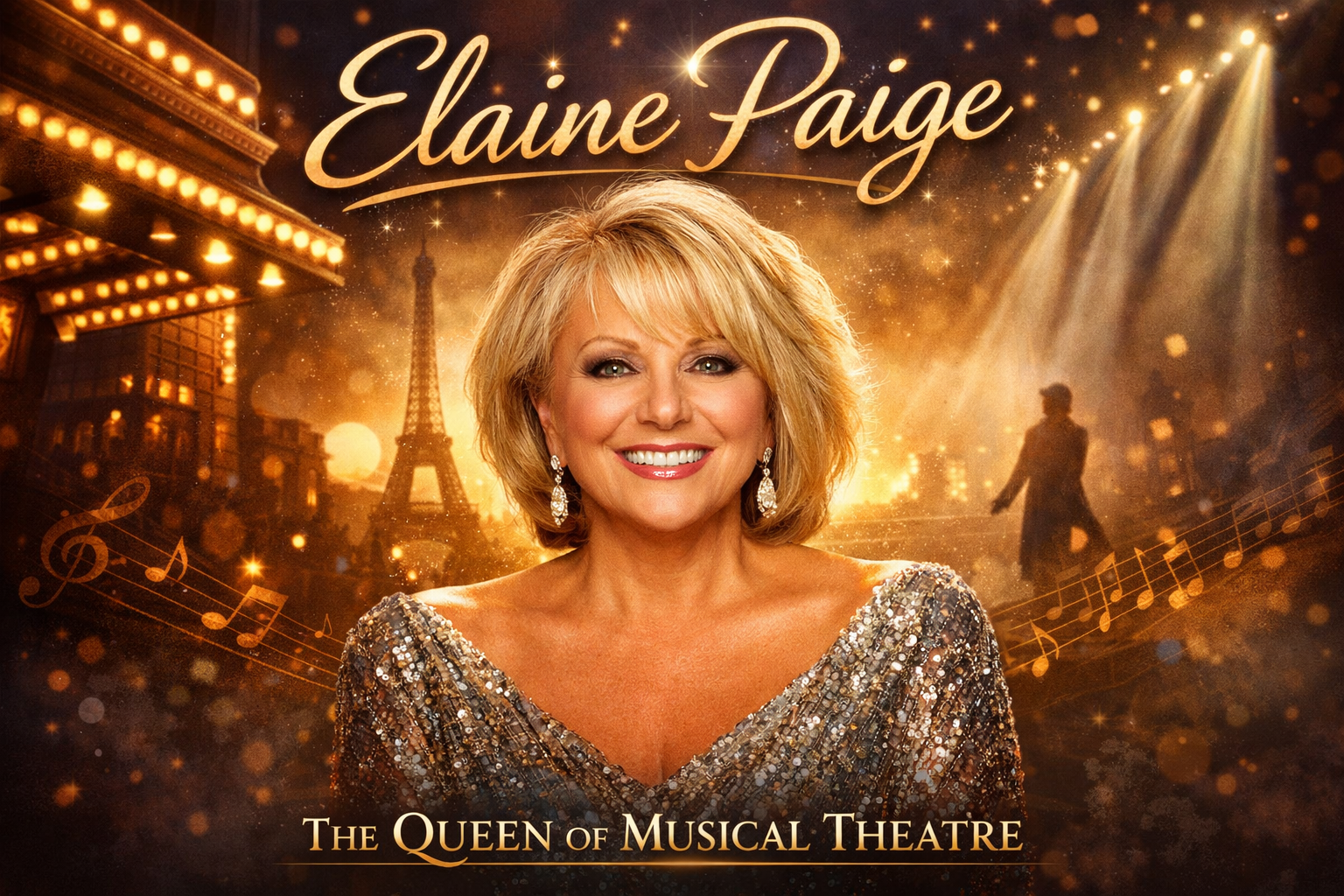
Introduction: Why Elaine Paige Remains a Musical Theatre Icon
In the world of musical theatre, very few performers manage to achieve legendary status while maintaining relevance across decades. Elaine Paige is one of those rare figures. Known for her powerful voice, emotional depth, and commanding stage presence, Paige has become one of Britain’s most celebrated musical theatre performers. Her career spans more than five decades, during which she has influenced both the West End and global musical theatre culture.
Paige’s breakthrough moment came in the late 1970s when she starred as Eva Perón in the musical Evita. The role instantly propelled her into the spotlight and introduced audiences to a performer capable of delivering both technical precision and raw emotional intensity. From that point forward, she became closely associated with some of the most iconic productions in theatre history.
Beyond her stage work, Paige has also built a reputation as a recording artist and radio presenter. Her long-running show on BBC Radio 2 helped introduce musical theatre to wider audiences. Today, she is widely regarded not only as a performer but also as an ambassador for the art form itself.
Early Life and Musical Influences
Elaine Paige was born on March 5, 1948, in Barnet, North London, England. Growing up in a working-class family, she discovered her love for music and performance at an early age. Her parents were supportive of her artistic interests, which allowed her to explore singing and acting during her formative years.
As a teenager, Paige became deeply influenced by American and British musical theatre recordings. Artists such as Barbra Streisand and stage productions from Broadway sparked her imagination. These influences shaped her understanding of performance, particularly the idea that singing in theatre must convey character and story rather than just technical skill.
Determined to pursue a professional career, Paige trained in drama and music while auditioning for various stage productions. Her early years were marked by persistence and resilience. Like many aspiring performers, she faced rejection and struggled to secure leading roles. However, these experiences helped refine her craft and prepared her for the breakthrough that would soon define her career.
Breakthrough Success with Evita
The turning point in Paige’s career arrived in 1978 when she was cast as Eva Perón in Evita, written by composer Andrew Lloyd Webber and lyricist Tim Rice. At the time, Paige was not the first choice for the role. However, her audition impressed the creative team, and she was ultimately selected for the part.
Playing Eva Perón required extraordinary vocal stamina and dramatic range. The role follows the rise of Argentina’s First Lady from poverty to political prominence, and the character appears in nearly every scene. Paige’s performance captivated audiences with its emotional complexity and vocal power, particularly in the iconic song “Don’t Cry for Me Argentina.”
The production became a massive success in London’s West End, and Paige’s portrayal earned her the Laurence Olivier Award for Best Performance in a Musical. The role not only established her as a leading performer but also positioned her at the center of a new era in British musical theatre.
Defining Roles in West End Musical Theatre
After the success of Evita, Paige became one of the most sought-after performers in London’s West End. She continued to collaborate with leading composers and directors, building a career defined by powerful leading roles.
One of her most famous performances came in the musical Cats, where she played Grizabella. The character’s signature song, “Memory,” became one of the most recognizable songs in musical theatre history. Paige’s rendition of the song helped cement its emotional impact and remains widely admired by theatre enthusiasts.
Another major milestone came with the musical Chess. In this production, Paige portrayed Florence Vassy, delivering a complex performance that balanced romance, political tension, and personal conflict. Her work in Chess demonstrated her versatility and ability to bring depth to contemporary musical theatre roles.
Later in her career, Paige took on the challenging role of Norma Desmond in Sunset Boulevard. The character, a fading silent-film star, required intense dramatic expression and vocal strength. Paige’s interpretation was widely praised for its emotional nuance and theatrical authority.
Recording Career and Musical Achievements
In addition to her theatre work, Elaine Paige developed a successful recording career. Her albums often feature songs from musicals, classical crossover pieces, and reinterpretations of popular standards. This combination allowed her to appeal to both theatre fans and mainstream music audiences.
One of the defining characteristics of Paige’s recordings is her ability to interpret lyrics with emotional authenticity. Rather than relying solely on vocal power, she focuses on storytelling. This approach has made many of her recordings favorites among musical theatre enthusiasts and collectors.
Her albums have frequently appeared on UK charts, and she has collaborated with several renowned artists. Paige also performed in major concert venues around the world, including symphony halls and theatre stages. These concerts often featured orchestral arrangements that highlighted the dramatic qualities of musical theatre compositions.
Broadcasting Career and Cultural Influence
Beyond the stage and recording studio, Elaine Paige has had a significant impact as a broadcaster. For many years she hosted a weekly musical theatre program on BBC Radio 2. The show introduced listeners to classic and contemporary musical theatre songs, interviews with performers, and behind-the-scenes stories from the industry.
Through this platform, Paige helped bring musical theatre to audiences who might not regularly attend stage productions. Her warm presenting style and deep knowledge of the genre made the show both educational and entertaining. Many listeners credit the program with expanding their appreciation for theatre music.
Her role as a broadcaster also reinforced her reputation as a cultural ambassador for musical theatre. By promoting new productions and emerging artists, Paige contributed to the continued growth of the theatre community in the United Kingdom and beyond.
Awards, Honors, and Industry Recognition
Elaine Paige’s contributions to theatre and music have been widely recognized by critics and industry organizations. Early in her career, she received the Laurence Olivier Award for her performance in Evita. This prestigious award highlighted her ability to deliver a transformative stage performance.
Over the years, she has also received numerous nominations and special honors for her work in theatre and broadcasting. In recognition of her contributions to the performing arts, Paige was appointed an Officer of the Order of the British Empire (OBE). This honor acknowledged both her artistic achievements and her influence on British cultural life.
Beyond formal awards, Paige’s greatest recognition may come from the respect she commands within the theatre community. Many younger performers cite her performances as inspiration, and her recordings continue to serve as reference points for interpreting classic musical theatre songs.
Elaine Paige’s Legacy in Musical Theatre

Elaine Paige’s legacy extends far beyond individual performances. She helped define what it means to be a modern musical theatre performer—someone who combines acting, singing, and emotional storytelling into a unified performance style.
Her work also helped elevate the global reputation of London’s West End theatre scene. During the late 20th century, productions such as Evita and Cats demonstrated that British musicals could compete with Broadway on an international scale. Paige’s performances played a key role in that transformation.
Today, her influence can be seen in countless performers who strive to balance vocal excellence with dramatic authenticity. By maintaining high artistic standards throughout her career, Paige set a benchmark for professionalism and creative dedication in musical theatre.
Conclusion
Elaine Paige’s career represents one of the most remarkable journeys in modern musical theatre. From her breakthrough performance in Evita to her unforgettable portrayal of Grizabella in Cats, she has consistently delivered performances that combine vocal brilliance with emotional depth.
Beyond the stage, her contributions as a recording artist and radio presenter have helped introduce musical theatre to new audiences around the world. Her work demonstrates how a performer can shape an entire artistic field while remaining dedicated to storytelling and craft.
For theatre lovers, Elaine Paige is more than a performer—she is a symbol of the enduring power of musical theatre. Her legacy continues to inspire performers, composers, and audiences who believe in the transformative magic of live performance.
Frequently Asked Questions (FAQs)
Who is Elaine Paige?
Elaine Paige is an English singer, actress, and broadcaster best known for her work in musical theatre. She gained international recognition for starring in productions such as Evita, Cats, and Sunset Boulevard.
What is Elaine Paige most famous for?
She is most famous for playing Eva Perón in Evita and Grizabella in Cats. Her performance of the song “Memory” from Cats became one of the most iconic musical theatre recordings.
Did Elaine Paige win any major awards?
Yes. She won the Laurence Olivier Award for Best Performance in a Musical for her role in Evita. She has also received many honors for her contributions to theatre and broadcasting.
Is Elaine Paige still active in entertainment?
While she performs less frequently on stage today, Paige remains active through concerts, special appearances, and her continuing involvement in musical theatre broadcasting and events.
Why is Elaine Paige important to musical theatre?
Elaine Paige helped define the modern West End musical theatre tradition. Her performances, recordings, and broadcasting work have influenced generations of performers and brought musical theatre to wider audiences.