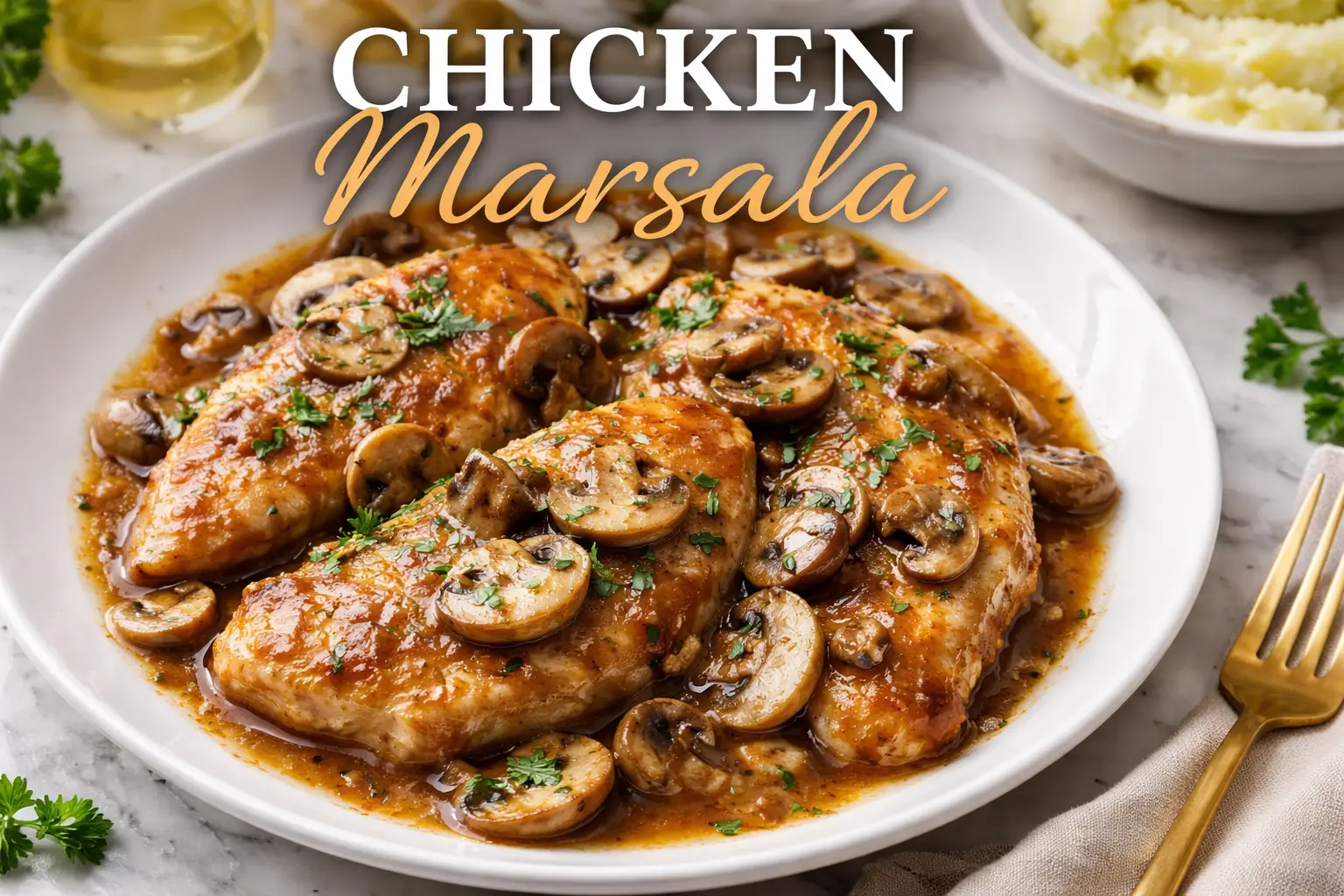
Few dishes balance elegance and comfort as beautifully as Chicken Marsala. With its golden pan-seared chicken cutlets, earthy mushrooms, and rich Marsala wine sauce, this Italian-American favorite delivers restaurant-level flavor using surprisingly simple ingredients.
Whether you’re researching the history of Chicken Marsala, looking for a foolproof recipe, or comparing cooking methods, this comprehensive guide covers everything you need to know — written with culinary expertise, practical kitchen experience, and SEO-optimized structure for modern readers.
What Is Chicken Marsala?
Chicken Marsala is a classic Italian-American dish made with thinly pounded chicken breasts, sautéed mushrooms, and a savory sauce prepared with Marsala wine. The chicken is lightly dredged in flour, pan-seared until golden, and finished in a reduced wine sauce that develops deep, caramelized flavor.
While many people associate the dish with Italian cuisine, Chicken Marsala as we know it today is primarily an American adaptation. The dish draws inspiration from traditional Sicilian cooking, particularly the use of Marsala wine from the region around the city of Marsala. In Sicily, Marsala wine has been used in both sweet and savory cooking for centuries.
In American kitchens, Chicken Marsala became popular in the mid-20th century as Italian immigrants adapted their culinary traditions to locally available ingredients. Today, it is a staple on restaurant menus and a favorite among home cooks seeking a flavorful yet approachable dinner.
The History and Origins of Marsala Wine
To understand Chicken Marsala, you must understand Marsala wine. Produced in western Sicily, Marsala is a fortified wine similar in concept to sherry or port. It was first popularized internationally in the late 18th century when British merchants began exporting it widely.
Marsala wine comes in several styles: dry, semi-dry, and sweet. For savory dishes like Chicken Marsala, dry Marsala is traditionally preferred because it enhances umami depth without adding excessive sweetness. The wine’s caramel, nutty, and slightly smoky notes form the backbone of the sauce.
When reduced in a hot pan, Marsala wine intensifies, creating a glossy, flavor-packed sauce. This reduction process is critical — improper heat control can result in bitterness. Experienced cooks understand that patience and proper deglazing technique make all the difference.
Key Ingredients That Define Authentic Chicken Marsala
Authentic Chicken Marsala relies on a handful of high-quality ingredients rather than complex seasoning. Each component plays a specific culinary role.
Chicken Cutlets: Boneless, skinless chicken breasts are sliced horizontally and pounded to an even thickness. This ensures quick, uniform cooking and prevents dryness.
Mushrooms: Cremini mushrooms are commonly used due to their deeper flavor compared to white button mushrooms. Some chefs incorporate porcini or shiitake mushrooms for added complexity.
Marsala Wine: Dry Marsala is essential. Cooking wine labeled “Marsala” often contains added salt and preservatives; a quality drinking Marsala produces superior results.
Aromatics and Fat: Shallots or garlic provide depth. A combination of olive oil and butter offers both flavor and controlled browning.
Stock or Broth: Many modern recipes add chicken stock to balance acidity and stretch the sauce without diluting flavor.
These ingredients, when treated correctly, create a sauce that is silky, balanced, and intensely savory.
Step-by-Step: How to Make Chicken Marsala at Home
Making Chicken Marsala at home requires technique more than complexity. Understanding each stage ensures professional results.
1. Prepare the Chicken
Start by slicing and pounding the chicken to approximately ¼-inch thickness. Lightly season with salt and freshly ground black pepper. Dredge each piece in flour, shaking off excess. The flour creates a light crust and helps thicken the sauce later.
Heat a stainless-steel or heavy-bottom skillet over medium-high heat. Add olive oil and a small amount of butter. Sear the chicken until golden brown on both sides, about 3–4 minutes per side. Remove and set aside.
2. Build the Sauce
In the same pan, sauté mushrooms until deeply browned. Avoid overcrowding, which causes steaming instead of caramelization. Add shallots or garlic briefly.
Deglaze with dry Marsala wine, scraping up browned bits from the pan — these fond particles contain concentrated flavor. Let the wine reduce by half before adding chicken stock. Simmer until slightly thickened.
3. Finish and Balance
Return the chicken to the pan and simmer gently until fully cooked (internal temperature of 165°F / 74°C). Finish with a small knob of butter for shine and richness. Taste and adjust seasoning carefully — over-salting can overpower the wine’s subtle complexity.
Serve immediately for best texture and flavor.
Variations of Chicken Marsala
Chicken Marsala has evolved significantly in home kitchens and restaurants. While purists prefer the classic preparation, several popular variations exist.
Creamy Chicken Marsala: Some recipes incorporate heavy cream, creating a richer, more velvety sauce. Though not traditional, it appeals to those who prefer a milder wine profile.
Prosciutto Marsala: Thin slices of prosciutto are wrapped around the chicken before searing, adding saltiness and depth.
Veal Marsala: In many Italian-American restaurants, veal replaces chicken for a more tender, delicate texture.
Gluten-Free Version: Substitute flour with rice flour or a gluten-free blend for dietary needs.
Each variation changes texture and flavor balance, so adjustments in seasoning and reduction time are often necessary.
What to Serve with Chicken Marsala
Chicken Marsala pairs beautifully with starches that absorb the sauce.
Mashed Potatoes: Creamy mashed potatoes are perhaps the most popular pairing, offering contrast to the wine-based sauce.
Pasta: Linguine or fettuccine works well, especially when tossed lightly in the Marsala sauce.
Polenta: Soft, buttery polenta complements the earthy mushrooms particularly well.
Crusty Bread: Ideal for soaking up every drop of sauce.
Balanced side dishes such as sautéed spinach or roasted asparagus provide freshness and visual contrast.
Common Mistakes to Avoid
Even experienced cooks occasionally struggle with this dish. Here are the most common pitfalls:
- Using Sweet Marsala: Sweet varieties overpower the dish.
- Overcrowding the Pan: This prevents browning.
- Skipping Reduction: The sauce must reduce for proper flavor concentration.
- Overcooking the Chicken: Thin cutlets cook quickly — prolonged simmering causes dryness.
- Using Low-Quality Wine: The wine defines the sauce; quality matters.
Professional cooks understand that proper heat management and patience are critical.
Nutritional Overview and Dietary Considerations
Chicken Marsala is moderate in calories and relatively high in protein due to lean chicken breast. However, calorie count varies depending on butter and cream usage.
For a lighter version:
- Reduce butter
- Omit cream
- Use minimal flour
- Serve with vegetables instead of starch-heavy sides
If you have dietary restrictions (such as alcohol avoidance), note that most alcohol cooks off during reduction, but not entirely. Those with medical, religious, or health restrictions should consult a healthcare professional before consuming dishes prepared with wine.
How to Store and Reheat Chicken Marsala
Leftover Chicken Marsala stores well in an airtight container for up to three days in the refrigerator.
To reheat:
- Warm gently in a skillet over low heat.
- Add a splash of broth if the sauce has thickened excessively.
- Avoid microwave reheating if possible, as it may toughen the chicken.
Freezing is possible but may alter mushroom texture.
Frequently Asked Questions (FAQs)
Is Chicken Marsala Italian or Italian-American?
It is widely considered Italian-American, inspired by Sicilian cooking traditions.
Can I make Chicken Marsala without wine?
You can substitute broth with a splash of balsamic vinegar, but the flavor will not be authentic.
What is the best wine to use?
Dry Marsala wine intended for drinking — not salted cooking wine.
Can I use chicken thighs instead of breasts?
Yes, but cooking time will increase slightly, and the flavor will be richer.
How do I thicken the sauce?
Proper reduction usually suffices. If necessary, a small slurry of cornstarch can help, though it is not traditional.
Conclusion: Why Chicken Marsala Remains a Timeless Favorite
Chicken Marsala endures because it balances simplicity and sophistication. With only a handful of ingredients — chicken, mushrooms, and Marsala wine — it delivers complex flavor through proper technique and reduction.
By selecting quality dry Marsala, controlling heat carefully, and respecting the classic method, home cooks can achieve restaurant-quality results. Whether served over mashed potatoes, pasta, or polenta, this dish offers comfort, depth, and culinary heritage in every bite.
For those exploring Italian-American classics, Chicken Marsala is more than a recipe — it’s a lesson in balance, technique, and tradition.