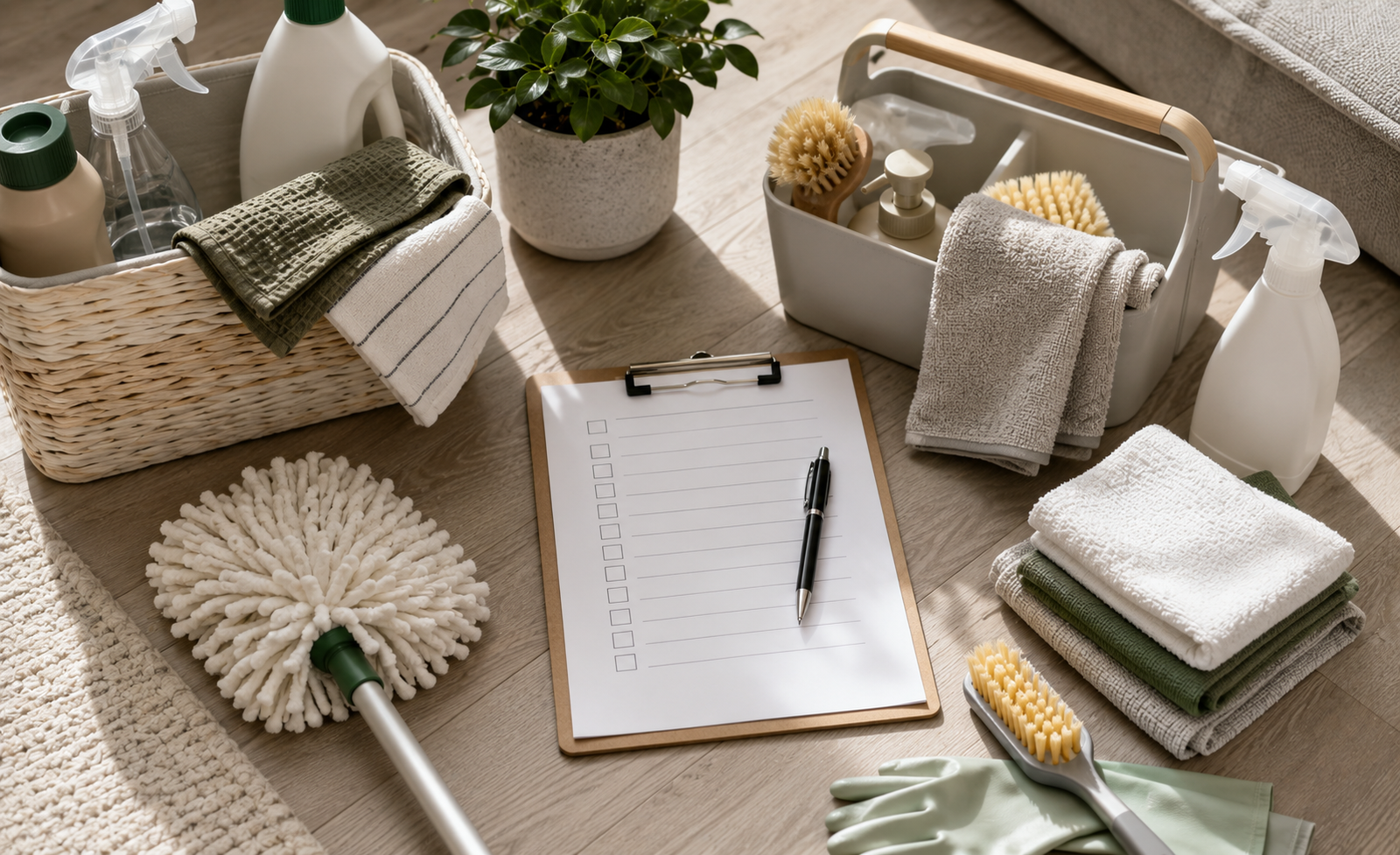
Most people don’t fail at cleaning because they lack motivation on a random Tuesday — they fail because they never had a real system to begin with. Cleaning tends to get treated as a reactive task: something you do once the mess becomes impossible to ignore, rather than something structured into a routine that prevents the mess from building up in the first place. That reactive pattern is exhausting, and it’s also the main reason cleaning feels like a constant uphill battle for so many households.
This guide breaks down why ad hoc cleaning fails so consistently, and how to build a routine that actually holds up over time instead of collapsing after a few good weeks.
The Problem With “I’ll Clean When It Gets Messy”
Cleaning based purely on visible mess creates a boom-and-bust cycle: things look fine for a while, then suddenly feel overwhelming all at once, which makes the whole task feel bigger and more draining than it needs to be. This approach also means certain tasks — the ones that don’t create obvious visible mess, like dusting baseboards or cleaning behind appliances — get skipped indefinitely, since there’s never an obvious trigger prompting them.
A structured routine solves both problems by decoupling cleaning from visible mess entirely. Tasks happen on a schedule regardless of how the space currently looks, which means small maintenance prevents the buildup that leads to overwhelming, all-day cleaning sessions.
Separating Tasks by Frequency, Not by Room
One of the most common mistakes in DIY cleaning routines is organizing by room rather than by frequency. Room-by-room thinking sounds intuitive, but it tends to bundle tasks that need daily attention (wiping counters) with tasks that only need monthly attention (deep-cleaning an oven), which makes the whole routine feel equally demanding across the board when it really isn’t.
A frequency-based structure works better in practice:
- Daily tasks — quick resets that take a few minutes: wiping counters, doing dishes, a fast tidy of common areas
- Weekly tasks — slightly more involved: vacuuming, bathroom cleaning, changing sheets, mopping
- Monthly tasks — deeper maintenance: baseboards, appliance interiors, window cleaning, decluttering sessions
- Seasonal tasks — bigger, less frequent projects: deep carpet cleaning, closet reorganization, gutter maintenance
Separating tasks this way means daily cleaning stays genuinely quick and manageable, while the heavier tasks get spread out rather than piling into one overwhelming cleaning day.
Building a Schedule That Matches Your Actual Life
A cleaning schedule copied directly from someone else’s routine often fails simply because it doesn’t match your actual household. A single person working from home has a very different realistic cleaning capacity than a family of five with a rotating set of after-school activities. Before committing to any schedule, it helps to be honest about how much time is genuinely available on a normal day, rather than an idealized one.
A detailed weekly and monthly cleaning schedule framework is useful here as a starting template, since adapting an existing structure tends to be far easier than building one entirely from scratch — the key is treating it as a flexible starting point rather than a rigid script that has to be followed exactly.
Anchoring Tasks to Existing Habits
Cleaning tasks stick far better when they’re anchored to something you’re already doing consistently, rather than treated as a standalone item on a to-do list. Wiping the bathroom sink while brushing your teeth, doing a quick kitchen reset while dinner cooks, or running a load of laundry on the same day every week (payday, trash day, whatever’s memorable) all reduce the mental effort of remembering to clean in the first place.
This habit-stacking approach tends to outperform willpower-based routines significantly, since it removes the daily decision of “should I clean today” and replaces it with an automatic trigger tied to something already built into the day.
Why Small, Frequent Tasks Beat Big Occasional Ones
There’s a real efficiency argument for frequent, small cleaning tasks over infrequent deep cleans: maintaining a clean space takes meaningfully less total time and effort than restoring a badly neglected one. A kitchen wiped down daily takes a minute or two; the same kitchen left for two weeks often requires a much longer, more intensive session to get back to baseline.
This is part of why daily and weekly tasks matter more than people initially assume — they’re not just about immediate tidiness, they’re actively preventing the far more time-consuming deep-clean sessions that come from prolonged neglect.
Making the Schedule Realistic Enough to Actually Follow
The most common reason cleaning schedules fail isn’t laziness — it’s an unrealistic schedule that assumes more available time and energy than actually exists on a normal week. A schedule that looks great on paper but requires an hour of cleaning every single day will get abandoned within a few weeks by almost anyone with a busy, unpredictable schedule.
A few adjustments that make a schedule more likely to stick:
- Build in a buffer day each week for tasks that get missed, rather than assuming every task happens exactly on schedule
- Start with a shorter task list than feels ambitious, and add more once the shorter version becomes automatic
- Batch similar tasks together (all laundry-related tasks on one day) rather than scattering them unpredictably
- Revisit and adjust the schedule seasonally, since realistic capacity shifts with work demands, school schedules, and weather
Getting the Household Involved
A cleaning routine that relies entirely on one person tends to be far more fragile than one shared across a household. Even young children can take on simple, age-appropriate tasks, and partners or roommates sharing clearly defined responsibilities significantly reduces the load on any one person.
Assigning ownership of specific recurring tasks — rather than a vague “everyone helps out” expectation — tends to produce far more consistent results, since clear ownership removes the ambiguity that often leads to tasks quietly falling through the cracks.
Frequently Asked Questions
How do I start a cleaning routine if I’ve never really had one? Start small — pick two or three daily tasks and one weekly task, and let the routine build from there rather than attempting a comprehensive schedule immediately. This step-by-step guide to building a weekly and monthly schedule offers a practical starting structure if you want a template to adapt rather than building entirely from scratch.
What’s the biggest mistake people make with cleaning schedules? Building a schedule based on an idealized amount of free time rather than a realistic one. An overly ambitious schedule tends to get abandoned quickly, while a modest, consistent one is far more sustainable long-term.
How often should deep-cleaning tasks actually happen? Most deep-cleaning tasks — appliance interiors, baseboards, window cleaning — work well on a monthly or seasonal basis, since they don’t accumulate mess as quickly as daily-use surfaces.
Is it better to clean a little every day or do one big session weekly? Small, frequent maintenance generally requires less total time and effort than infrequent deep cleans, since it prevents the kind of buildup that turns cleaning into a much bigger task later.
Final Thought
A cleaning routine that actually lasts isn’t built on motivation or willpower — it’s built on a realistic, frequency-based structure that fits the life you actually have, not an idealized version of it. Once the system is in place, cleaning stops being an overwhelming, reactive chore and becomes a set of small, manageable habits.
Also Read: Why a Good Watch Still Matters (and How to Choose One That Actually Fits Your Style)