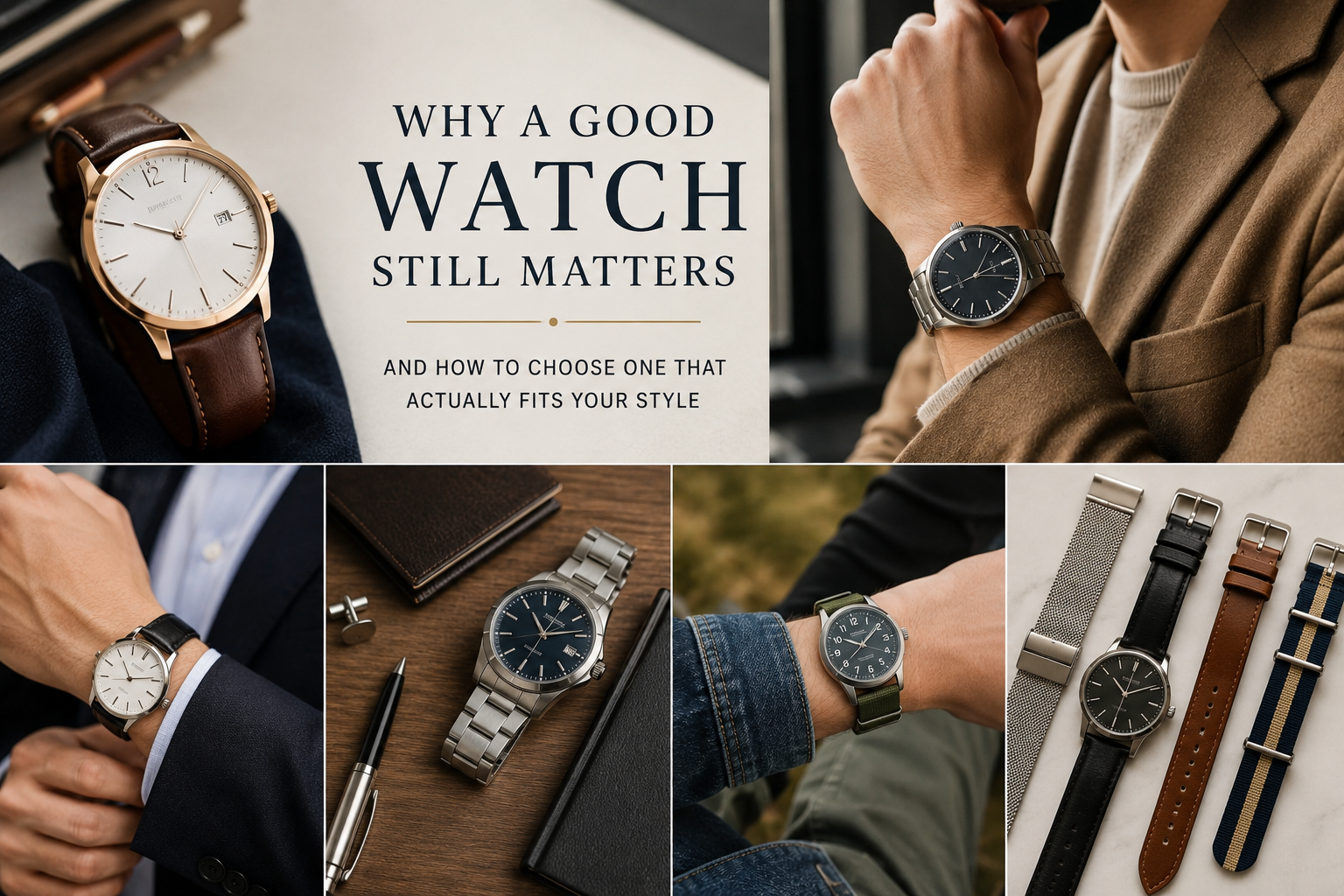
In a world where most people check the time on their phone, it’s fair to ask whether a wristwatch still earns a place in a wardrobe. The answer, for most stylists and accessory experts, is yes — but not for the reason it used to. A watch today functions less as a timekeeping necessity and more as a deliberate style statement, one of the few accessories worn consistently enough to become part of someone’s personal signature.
This guide walks through how to think about choosing a watch that actually fits your style and lifestyle, rather than picking one based on trend alone.
A Watch Is One of the Few “Always-On” Accessories
Most accessories rotate in and out depending on the outfit — a bag changes, jewelry changes, even shoes change day to day. A watch, by contrast, tends to be one of the few pieces people wear consistently across many different outfits and occasions. That consistency is exactly why the choice matters so much: a watch needs to work across your wardrobe as a whole, not just one specific look.
This is also why a watch tends to say more about personal style than almost any other single accessory. Because it’s worn so often, it becomes a quiet, recurring signal of taste — understated and classic, bold and statement-making, sporty and practical, or vintage-inspired and distinctive.
Matching Watch Style to Your Everyday Wardrobe
Before considering any specific brand or model, it helps to think about the overall tone of your everyday wardrobe. A minimal, neutral-toned wardrobe generally pairs well with a clean, simple watch face and a slim strap, since a busier watch design can feel disconnected from an otherwise pared-back style. A wardrobe with more texture, color, or vintage influence has more room for a watch with a bolder face, a distinctive strap material, or a more retro-inspired design.
A useful approach is choosing a watch the same way you’d choose a versatile handbag or a pair of go-to shoes — something that complements the bulk of your existing wardrobe rather than one that only works with a single outfit.
If you want to Read fashion related article Visit: StyleBlooming
Metal Tone: Matching or Intentionally Mixing
Just as with other jewelry, watch metal tone matters for how cohesive an outfit feels. Matching a watch’s metal tone to the rest of your jewelry (gold with gold, silver with silver) remains the safest, most polished default. That said, intentional metal mixing — a two-tone watch, or a metal that contrasts purposefully with other jewelry — has become widely accepted as a stylistic choice rather than a mismatch, as long as it reads as deliberate rather than accidental.
For anyone building a first “investment” watch, a neutral metal tone that pairs with both warm and cool jewelry tones tends to offer the most long-term versatility.
Strap Material Changes the Entire Feel
The watch face often gets the most attention, but strap material does an enormous amount of work in shifting a watch’s overall tone. A leather strap tends to read as classic and slightly dressier, making it a strong choice for work and more polished occasions. A metal bracelet strap often feels more versatile day-to-day, moving easily between casual and dressier settings. Fabric, silicone, or woven straps lean more casual and sporty, well suited to everyday wear or active settings.
Many watch designs today offer interchangeable straps, which is worth considering if you want one watch face to flex across a wider range of occasions without needing multiple watches.
Sizing and Proportion Matter More Than Trend
A watch that looks great in a photo can still feel wrong on an actual wrist if the proportions are off. A watch face that’s too large relative to a smaller wrist can look disproportionate and heavy, while a very small, delicate face on a larger wrist can get visually lost. Trying a watch on in person, or checking detailed sizing information when shopping online, helps avoid this mismatch far more reliably than judging size from a product photo alone.
As a general guideline, a watch face that comfortably sits within the wrist’s width — neither overhanging noticeably nor looking swallowed by the wrist — tends to look the most proportionate and intentional.
Choosing Between a Statement Watch and an Everyday Staple
Much like other accessories, it’s worth deciding whether you’re looking for a quiet, everyday staple or a bolder statement piece. An everyday staple typically features a simpler face, a versatile strap, and a metal tone that matches most of your existing jewelry — the kind of watch that disappears seamlessly into almost any outfit. A statement watch, on the other hand, might feature a distinctive face design, an unusual color, or a bolder strap material, and works best as an intentional focal point rather than a daily default.
Many people find that one reliable everyday watch, supplemented by one or two bolder pieces for specific occasions, covers most style needs without requiring an extensive collection.
What to Check Before Buying
A few practical checks are worth running through regardless of the specific watch you’re considering:
- Water resistance rating, if the watch will see any exposure to rain, washing hands, or swimming
- Band adjustability, to confirm a proper fit rather than one that’s too loose or requires immediate professional resizing
- Battery type and replacement accessibility, since some watch movements are easier and cheaper to service than others
- Authenticity verification, particularly when buying a recognizable branded watch through a third-party retailer rather than directly from the brand
Taking a few minutes on these details before purchasing tends to prevent the most common regrets people have with a new watch.
Frequently Asked Questions
Is a wristwatch still a relevant accessory if I already check time on my phone?
Yes — for most people today, a watch functions primarily as a style accessory rather than a timekeeping necessity, which is exactly why choosing one that fits your personal style matters more than ever.
Should my watch always match my other jewelry?
Matching metal tones is the safest, most polished default, but intentional mixing has become a widely accepted style choice as long as it looks deliberate rather than incidental.
How do I know if a watch face is the right size for my wrist?
The face should sit comfortably within the width of your wrist, without noticeably overhanging or looking too small and lost. Trying it on in person is the most reliable way to judge this.
Is it better to buy one versatile watch or several statement pieces?
Most people get more consistent use out of one reliable, versatile everyday watch, supplemented by one or two bolder pieces reserved for specific occasions.
Final Thought
A watch remains one of the most consistently worn accessories in a wardrobe, which makes the choice worth more thought than it often gets. Focusing on proportion, strap material, and how well it complements your everyday wardrobe will serve you far better long-term than chasing a specific trend.
For a closer look at a specific, popular option — including styling notes and buying considerations — Style Blooming’s Guess Phoenix Watch guide breaks down the details worth knowing before you buy.