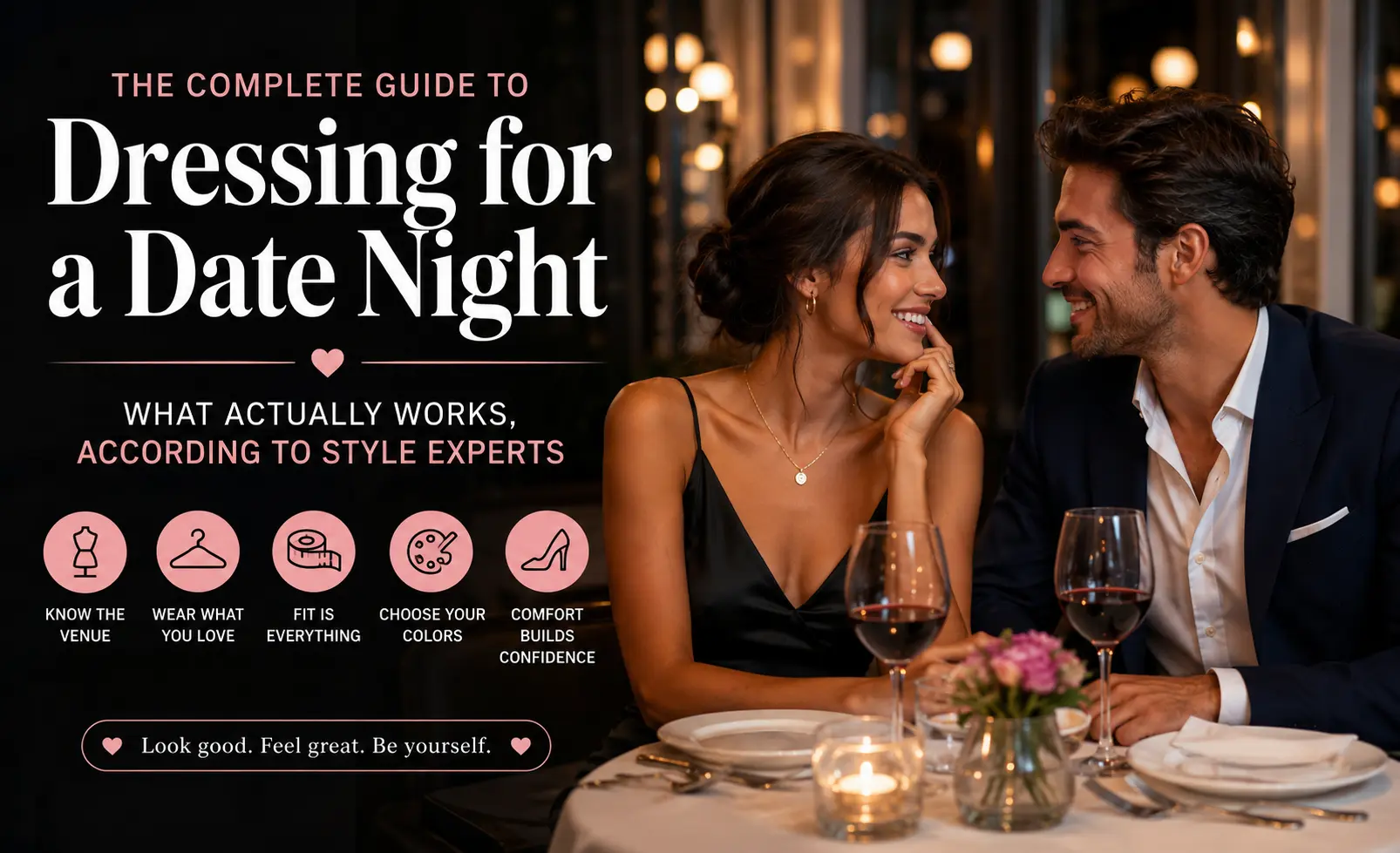
Getting dressed for a date night sounds simple until you’re standing in front of your closet twenty minutes before you need to leave, holding two completely different outfits, and still not feeling right about either one. It’s one of the most common style dilemmas people face, and it has less to do with owning “the right clothes” and more to do with understanding a few core principles that stylists rely on again and again.
This guide breaks down those principles in plain language, so you can walk into any date — a first coffee meetup, a five-year anniversary dinner, a spontaneous rooftop drink — feeling put together and, more importantly, like yourself.
Why Date Night Outfits Feel Harder Than They Should
Most style confusion comes down to one issue: date night outfits sit at the intersection of three competing goals. You want to look good, you want to feel comfortable enough to actually enjoy the evening, and you want the outfit to match the specific setting you’re walking into. When any one of those three is missing, the whole look feels off, even if every individual piece is nice.
A well-fitting blazer means nothing if it’s too warm for a beach bar patio. A gorgeous dress loses its charm if you spend the whole night tugging at it. And the most comfortable outfit in your closet can still feel wrong if it’s miles away from the restaurant’s dress code. Understanding this three-way balance is the real starting point, more than any specific trend or color.
Step One: Read the Venue Before You Read Pinterest
Before opening any outfit inspiration app, take thirty seconds to think about the actual place you’re going. A dimly lit wine bar, a casual taco spot, a formal tasting menu restaurant, and a walk-and-talk coffee date all call for different energy, even if the “vibe” you’re going for is the same.
A simple way to calibrate:
- Casual daytime settings (coffee, brunch, a walk) call for relaxed separates — think a nice top with well-fitted jeans or trousers, minimal jewelry, and comfortable shoes you can actually walk in.
- Casual evening settings (a wine bar, a lowkey dinner spot) allow for a bit more polish — swap the jeans for tailored trousers or a midi skirt, and add one statement accessory.
- Upscale settings (fine dining, a special occasion) call for elevated fabrics — silk, structured knits, tailored cuts — and a slightly more considered color palette.
Matching your outfit to the setting isn’t about rigid rules; it’s about not standing out for the wrong reasons. You want people to remember your smile, not the fact that you were visibly overdressed or underdressed for the room.
Step Two: Build From a Base You Already Feel Confident In
One thing experienced stylists agree on: confidence reads louder than any specific garment. An outfit you’ve worn before and know you feel good in will almost always outperform a brand-new, untested piece you’re still not sure about — especially for a night where you want your attention on the conversation, not your outfit.
A practical approach is to anchor the outfit around one piece you already love — a jacket, a pair of trousers, a dress — and build everything else around it. This cuts decision fatigue dramatically and tends to produce more cohesive results than starting from scratch every time.
If you do want to bring in something new, introduce just one new element (a top, a shoe, an accessory) rather than a full new outfit. This keeps the overall look grounded while still letting you feel fresh.
Step Three: Fit Beats Trend, Every Single Time
This is the principle that gets overlooked most often. A well-fitted basic outfit will almost always look more expensive and more intentional than an on-trend piece that doesn’t sit right on your frame. Fit affects posture, movement, and how light falls on fabric — all things that register instantly, even if the person looking at you couldn’t explain why an outfit “works.”
A few fit checks worth doing before you leave the house:
- Shoulders on tops and jackets should sit at your actual shoulder line, not sliding down or pulling up.
- Trousers should break cleanly at the shoe without heavy bunching.
- Waistlines should sit where they’re designed to sit rather than riding up or slipping down through the night.
- Fabric should skim the body rather than cling everywhere or hang shapelessly.
If a piece needs constant adjusting, it’s working against you all evening, no matter how nice it looks in the mirror at home.
Step Four: Choose a Color Story, Not Just a Color
Instead of picking colors at random, think in terms of a small palette — usually two to three colors that you already know work well together. A neutral base (black, white, tan, navy, olive) paired with one accent tone tends to photograph well and reads as intentional in person too, which matters since date nights are often documented in a photo or two.
If you gravitate toward bold color, let one piece carry it — a jacket, a bag, or a lip color — while the rest of the outfit stays quieter. This avoids the “costume” effect that can happen when every element is trying to be the main character.
Step Five: Don’t Underestimate Comfort as a Style Tool
Comfort isn’t the opposite of looking good — it’s actually one of the biggest levers for looking good. When you’re not distracted by tight waistbands, pinching shoes, or a top you keep adjusting, you naturally hold better posture, make more relaxed eye contact, and move more easily. All of that reads as confidence from the outside.
A few comfort-first swaps that don’t sacrifice style:
- Block heels or comfortable flats instead of unfamiliar new heels
- Stretch-blend trousers instead of stiff, non-give fabric
- A trusted bra or undergarment setup instead of anything untested
- Layering pieces you can remove if the venue runs warm
If you’re trying out a new outfit for the first time, do a quick “test run” at home — sit, walk, reach for something — the way you would during the actual date. It’s a small step that saves a lot of mid-date discomfort.
Step Six: Accessories Are the Fastest Way to Change the Mood
The same base outfit can read casual, romantic, or polished depending entirely on accessories. This is useful because it means you don’t need an entirely new wardrobe for different types of dates — you need a versatile base and a few accessory options.
- To dress an outfit up: add a structured bag, a delicate necklace layered with a statement earring, or a heeled shoe.
- To dress an outfit down: swap to a crossbody bag, minimal jewelry, and a flat or sneaker.
- To add a romantic touch: a soft scarf, a subtle shimmer fabric, or a warmer, richer color in one accessory.
Keeping this mental toggle in mind makes outfit planning faster because you’re adjusting one variable rather than rebuilding the whole look.
Step Seven: Weather-Proof the Outfit Without Losing the Look
A stylish outfit that leaves you shivering or overheating stops being stylish about ten minutes in. Building in a weather buffer is a small step people skip and then regret.
- For cooler evenings, choose a jacket or coat that actually complements the outfit rather than grabbing whatever’s by the door — a tailored coat or a leather jacket tends to work across most date-night looks.
- For warmer settings, breathable fabrics like cotton, linen blends, and lightweight knits keep you looking fresh rather than visibly overheated by the time you sit down.
- If the date includes any outdoor component, check the forecast and factor in a layer you can remove rather than one you’re stuck wearing the whole night.
Adjusting the Formula by Season
The same core principles apply year-round, but a few seasonal tweaks help the outfit actually work in real conditions rather than just looking good in theory.
Spring: Lightweight layers are your friend here, since evening temperatures can swing more than people expect. A slip dress with a cropped cardigan or a light blazer gives you room to adjust as the temperature shifts through the evening. Pastel and soft neutral palettes tend to feel seasonally appropriate without trying too hard.
Summer: Breathable fabrics matter more than anything else in warm weather — linen, cotton, and lightweight knits keep you looking fresh rather than visibly wilted by the time you’re seated. If the date includes any outdoor walking beforehand, factor that into fabric choice, since a stiff, non-breathable fabric will show wrinkles and sweat far more visibly by the end of the night.
Fall: This is often the easiest season to dress for, since richer tones, knitwear, and structured jackets all naturally read as date-night appropriate. A trench coat or a leather jacket over a simple outfit instantly elevates the look while also solving the temperature problem.
Winter: Warmth and style don’t have to compete if you plan the outer layer as part of the outfit rather than an afterthought. A well-fitted coat in a complementary color, paired with accessories that still show once the coat comes off (a statement earring, a bold lip, an interesting shoe), keeps the outfit feeling complete indoors and outdoors alike.
Dressing Well Without Overspending
A common misconception is that a polished date-night look requires an expensive new outfit. In practice, the principles above — fit, color coordination, and comfort — matter far more than price point, and a few smart habits stretch a wardrobe much further:
- Rotate a small set of versatile pieces. A well-fitted blazer, a good pair of trousers, and one versatile dress can be restyled into several different date-night looks just by swapping accessories and layers.
- Invest in tailoring over new purchases. A five- or ten-dollar tailoring adjustment on an existing piece often does more for the overall look than buying something new that doesn’t fit quite right.
- Treat accessories as the update, not the outfit. A new scarf, a pair of earrings, or a belt refreshes a familiar outfit for a fraction of the cost of new clothing.
- Keep one “reliable” outfit ready. Having one outfit you know fits well, suits multiple venues, and makes you feel confident removes the pressure to buy something new for every date.
None of this means style has to be expensive — it means the effort goes into fit and coordination rather than constantly buying new pieces.
A Simple Framework You Can Reuse
If you want a repeatable system rather than starting from zero every time, this three-question framework covers most of what matters:
- What’s the setting, and what does it call for? (Casual, semi-dressy, upscale)
- What’s my comfort non-negotiable tonight? (Shoes, waistband, temperature)
- What’s the one piece I want to build the outfit around? (A jacket, a dress, a pair of trousers)
Answering these three questions before you even open your closet cuts most of the decision fatigue and gets you to a finished outfit far faster.
If you want read more Fashion related article visit this site > STYLE BLOOMIMG
Common Mistakes to Avoid
A few patterns come up again and again when date night outfits don’t land the way people hoped:
- Wearing something completely untested. Save the debut of a brand-new outfit for a lower-stakes occasion first.
- Prioritizing the photo over the evening. An outfit that looks great in one still photo but is uncomfortable for three hours works against you.
- Ignoring the venue’s actual dress code. A quick look at the restaurant’s photos or reviews beforehand avoids awkward mismatches.
- Over-accessorizing. More than one true statement piece tends to compete rather than complement.
- Forgetting the walk-in and walk-out. Outfits are judged in motion — walking to the table, getting in and out of a car — not just seated at the table.
Frequently Asked Questions
How far in advance should I plan a date night outfit?
A day ahead is usually enough — it gives you time to check the weather, try the outfit on, and make any small swaps without the last-minute rush that leads to grabbing whatever’s easiest.
What’s a safe outfit choice when I don’t know the venue well?
Smart-casual tends to be the safest middle ground — tailored separates in a neutral palette that can be dressed up or down slightly with accessories once you get a better read on the room.
Should I prioritize trends or classic pieces for a date?
Classic, well-fitted pieces are the safer bet for a night where you want the focus on the conversation. Trends are great for building personal style over time, but a date night usually isn’t the moment to test-drive something entirely new.
How do I dress for a date in unpredictable weather?
Layer strategically — a lightweight cardigan, blazer, or jacket that can come off if it warms up is more practical than committing to one temperature-specific outfit.
What matters more, the outfit or the shoes?
Both matter, but shoes affect comfort and posture the most over a multi-hour evening, so they’re worth extra thought, especially if the date involves any walking.
Final Thought
The outfits that work best for date night are rarely the most elaborate ones — they’re the ones that fit well, suit the setting, and let you forget about your clothes once you sit down across from someone. Getting those fundamentals right matters more than chasing any specific trend.
For a closer look at specific outfit formulas by season and setting — including romantic dinner looks, casual daytime date outfits, and cold-weather date night styling — Style Blooming’s date night outfit ideas guide breaks down complete looks with styling notes for different occasions.
More Visit Bunbin